
Long Reef: A Haven for Native Plants
Protecting the Plants That Protect Long Reef
Long Reef's coastal heath and grasslands are home to diverse native plants that stabilise dunes, prevent erosion and provide vital habitat for wildlife and pollinators.
Through bush regeneration, weed removal and revegetation, Reefcare volunteers and Northern Beaches Council are restoring this unique landscape and supporting healthier ecosystems.
As part of a protected coastal reserve and Marine Protected Area, Long Reef's native vegetation plays a vital role in preserving one of Sydney's most significant natural environments.
Propagating Kangaroo Grass
Lisa and/or the Bush Regeneration section of NBC will visit Long Reef around August/September to find flowering seed heads of Kangaroo Grass and bring them back to propagate at the Council's North Curl Curl Nursery.
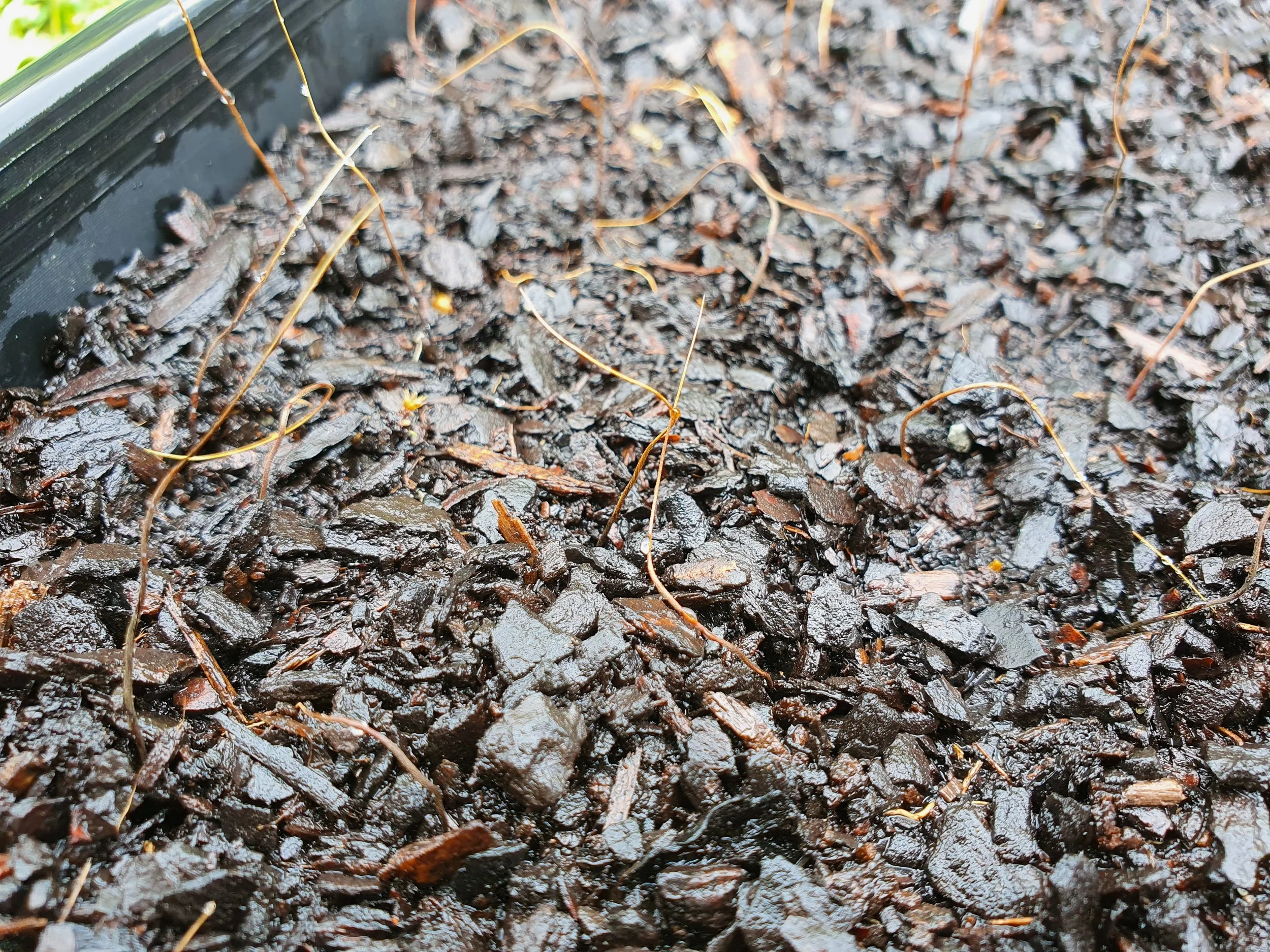
As the plant gets ready to seed, it turns a stunningly beautiful glowing golden glow of reddish-brown colour - a field of Kangaroo grass at this time of year will take your breath away. Timing and the selection of the seed heads from site is critical, as the seed head must be on the turn from green to black. The seed heads are then left in a brown paper bag for a month or two to dry out before being planted. The success rate is very low as only a third of seeds are fertile. Once the seeds are placed on the seedling tray and are ready to be watered in, the crew get very excited and gather around the tray to watch the seed head do a ballet dance as they twist and turn to get the awn into the soil (Left image below).
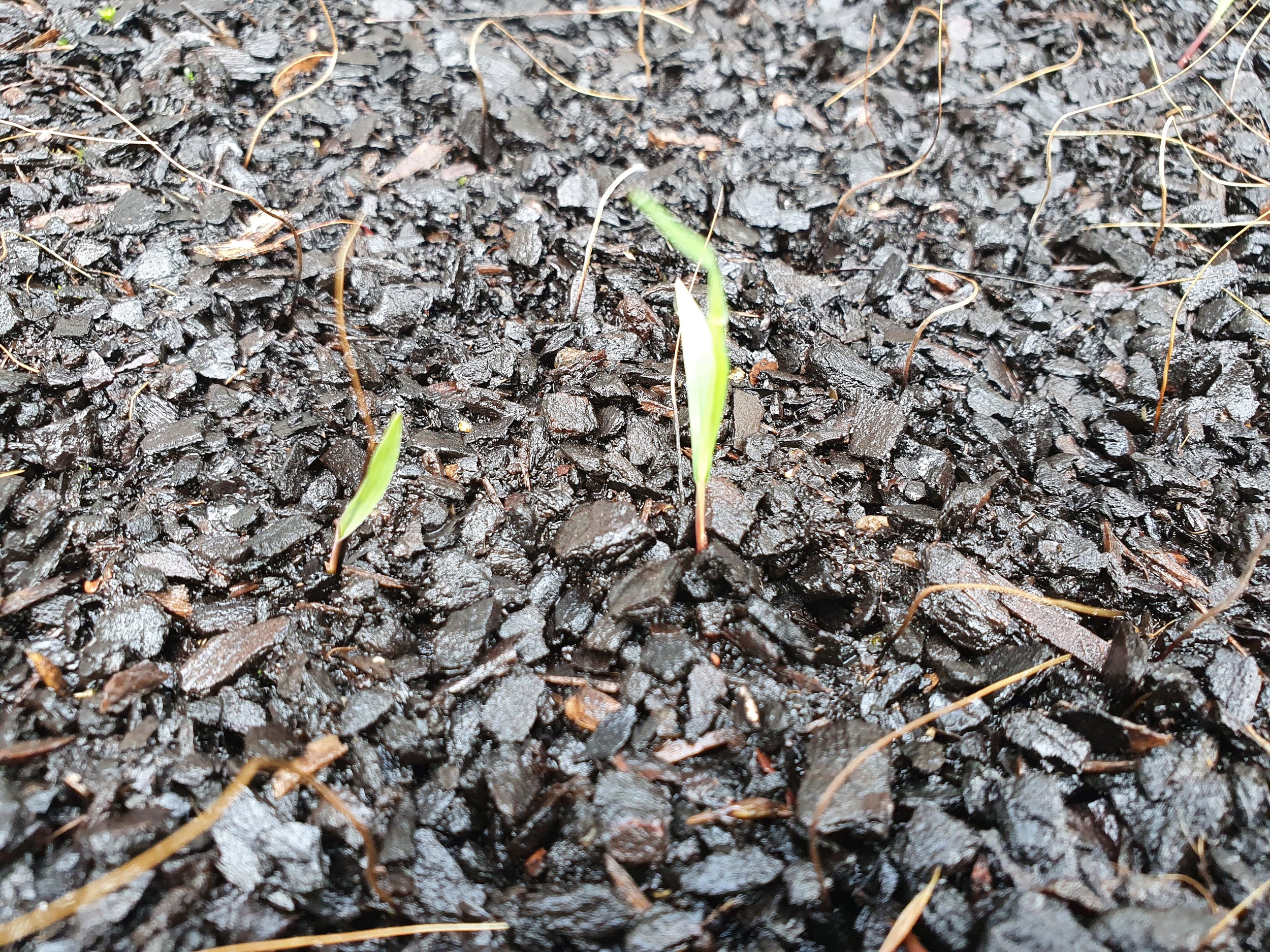
The trays of Kangaroo grass are then placed in the greenhouse, and a few weeks later, new grasses start to appear (Right image below). After about 6 months, the young seedlings are transferred from the seedling tray to a tube. They are left in the greenhouse until ready to be taken out, and 'hardened' off on the outside benches. After about 18 months to 2 years, this tube stock may be ready for planting.
There is so much time and effort in producing plants, and hence the adage at Reefcare when planting: It is not quantity - it is quality of planting.
-
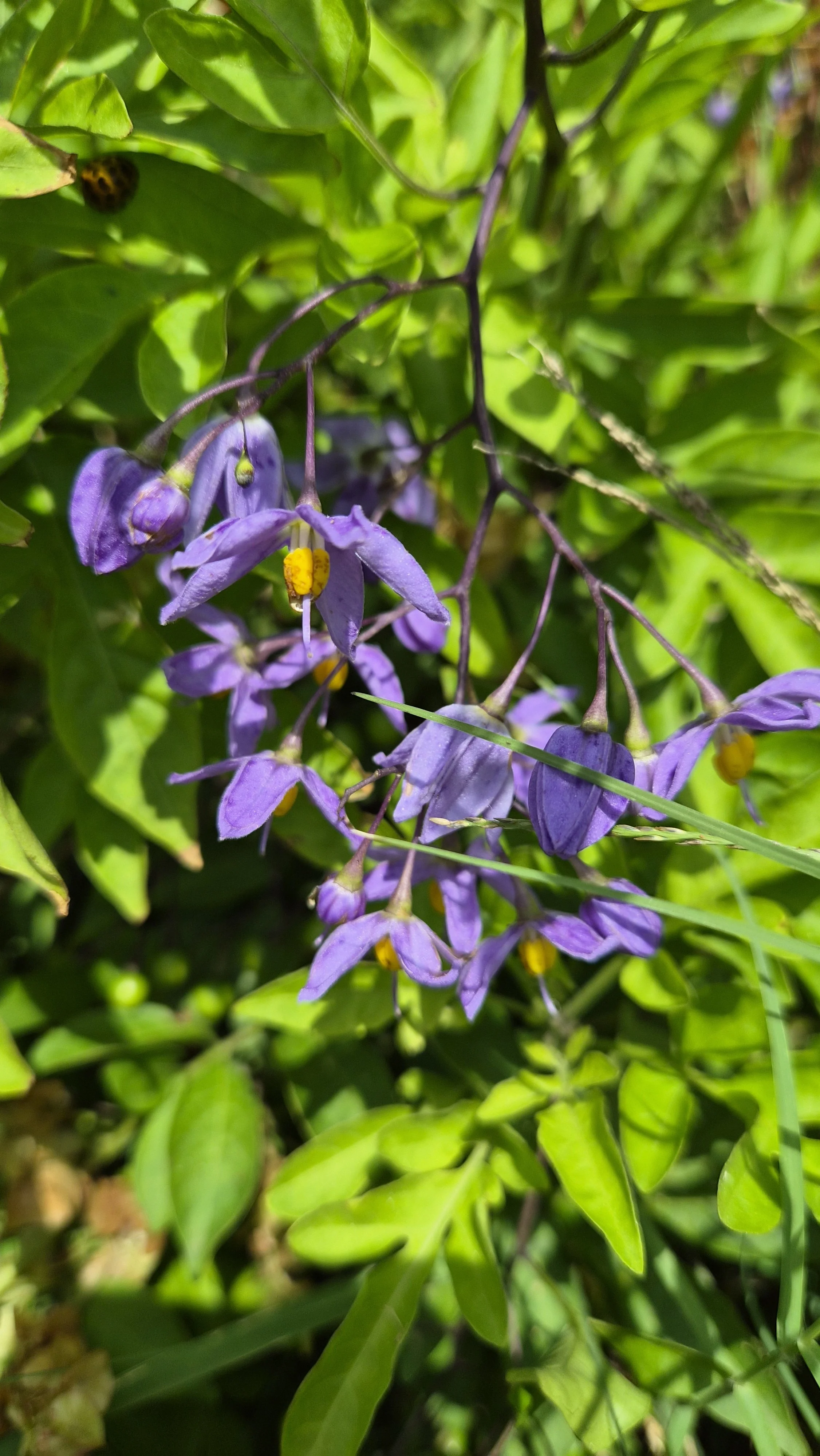
Blue Flax-lily
Scientific name: Dianella caerulea
Family: Liliaceae
Status: Not considered to be at risk in the wildGeneral Information: This is a herbaceous, clumping perennial plant, growing up to a metre high and wide in the best conditions. At our Reefcare site, it is much more reduced in width. Once established, it grows from a thick underground rhizome. It has dark green, blade-like leaves up to 70 cm long and wonderful sprays of beautiful small blue/purple coloured flowers, with what appear to be bright yellow stamens, in spring and summer. This is followed by indigo-blue berries that have small black seeds.
This is very hardy and long-lived, and it does well on our site; albeit tending not to spread to 1 metre. The plant attracts fruit-eating birds and butterflies. The roots and berries are traditional native food, and the berries make a permanent blue dye.
-
Bracelet Honey-myrtle
Scientific name: Melaleuca armillaris
Family: Myrtaceae
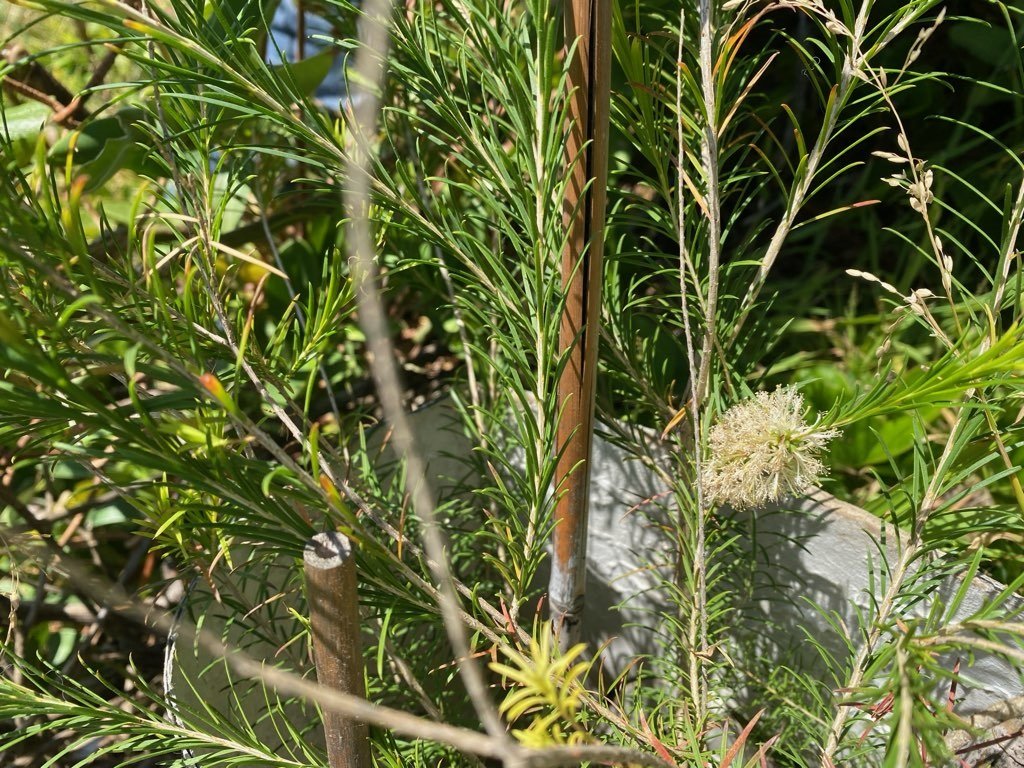
Status: This Melaleua is Not threatened and Common in suitable coastal habitatsGeneral Information: Large shrub to small tree (typically 3–8 m tall) with a preferred habitat of Coastal headlands, cliffs, and exposed ridgelines with sandy or shallow, well-drained soils as it tolerates salt spray and wind exposure so well suited to Long Reef conditions. It is native to eastern Australia (NSW and VIC) being common along coastal NSW, including the Sydney region and is widely used in revegetation. It flowers mainly September to December and is insect pollinated by bees, flies and beetles. It also attracts nectar-feeding birds. It is Moderately fire-adapted; can regenerate from seed after fire. This Melaleuca is an Important nectar source for pollinators and provides habitat and shelter for small birds and insects often found with Coastal heath species (e.g. Banksia, Leptospermum, Westringia) which are all on site at Long Reef.
-
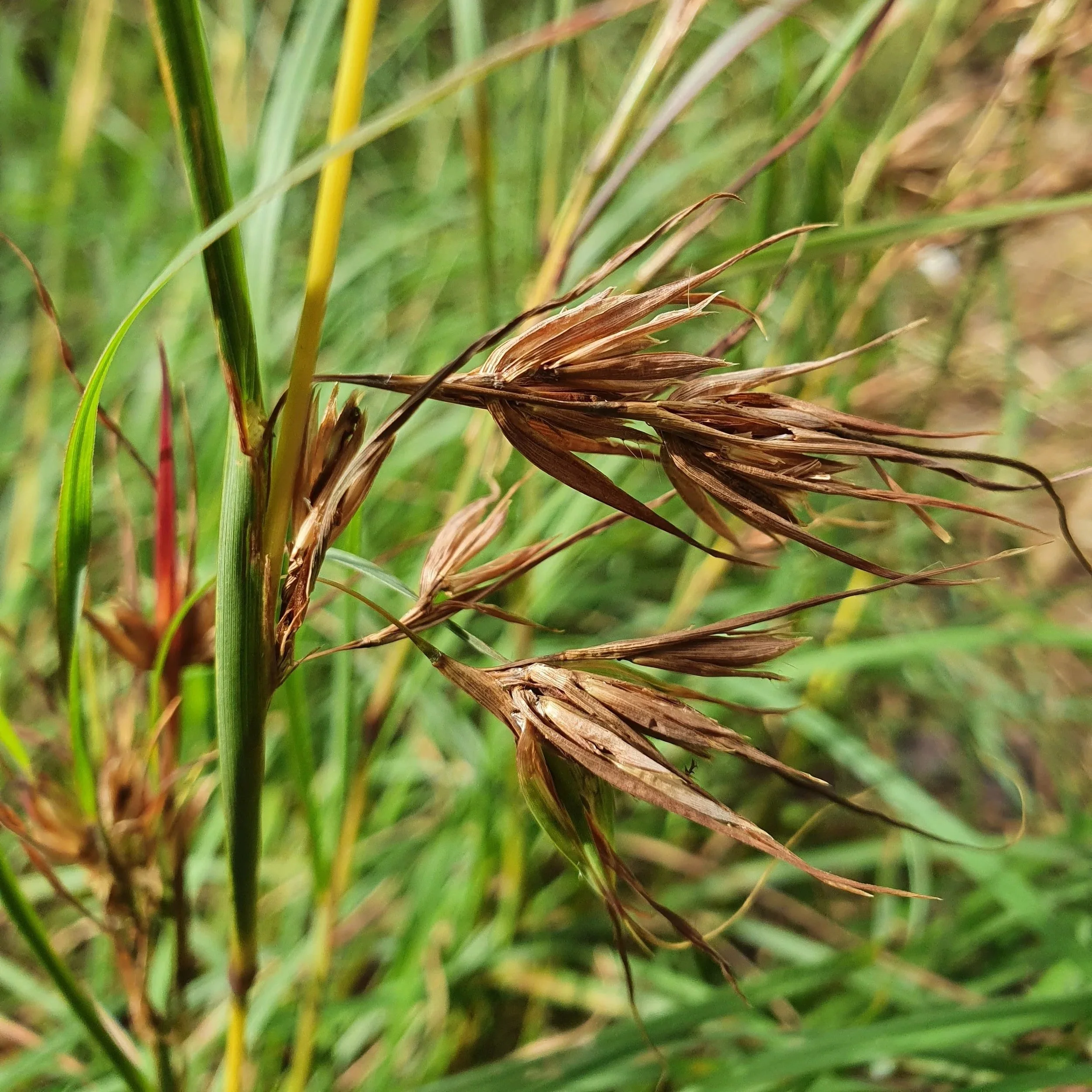
Kangaroo Grass
Scientific name: Themeda australis / Themeda triandra
Family: Poaceae
Status: The Themeda australis species is not threatened, but Themeda Grasslands on Coastal Headlands are endangered in NSW.General Information: The primary objective of the Reefcare bush regeneration group is to rid Long Reef Point of the invasive South African plant, Bitou bush, and re-establish the grassland with what was there previously – Kangaroo Grass. It was a very significant species in early Australia, with a seriously wide distribution. It was a major food source for cattle as early settlers left Sydney and headed south down the Monaro area to look for more grazing areas. However, Kangaroo Grass does not do well under heavy grazing. It was used as livestock feed in early colonial Australia, but it does not do well under heavy grazing, so it was replaced by introduced grasses. These grasses are now commonly found on sheep and cattle farms.
Before the colonisation of Australia, Kangaroo Grass was harvested by Indigenous Australians for food, with the grains being collected and ground into flour and porridge. The flour was used to make traditional bread, later referred to as damper, although that term is mostly used for bread made by non-Indigenous Australians. The bread is said to have a nutty flavour. Evidence has been found of this food production occurring around 30,000 years ago, with the grain considered to be a staple food for First Australians. Landline in 2021 had a program where some Australian farmers were endeavouring to grow this native grass and produce flour for bread that could be beneficial for those with a gluten intolerance.
This beautiful grass is now part of a grassland habitat considered endangered or threatened in many parts of the country, especially in NSW, where farms have taken over the old grasslands. Our site at Long Reef is rare in bush regeneration in that we are restoring the Themeda grassland.
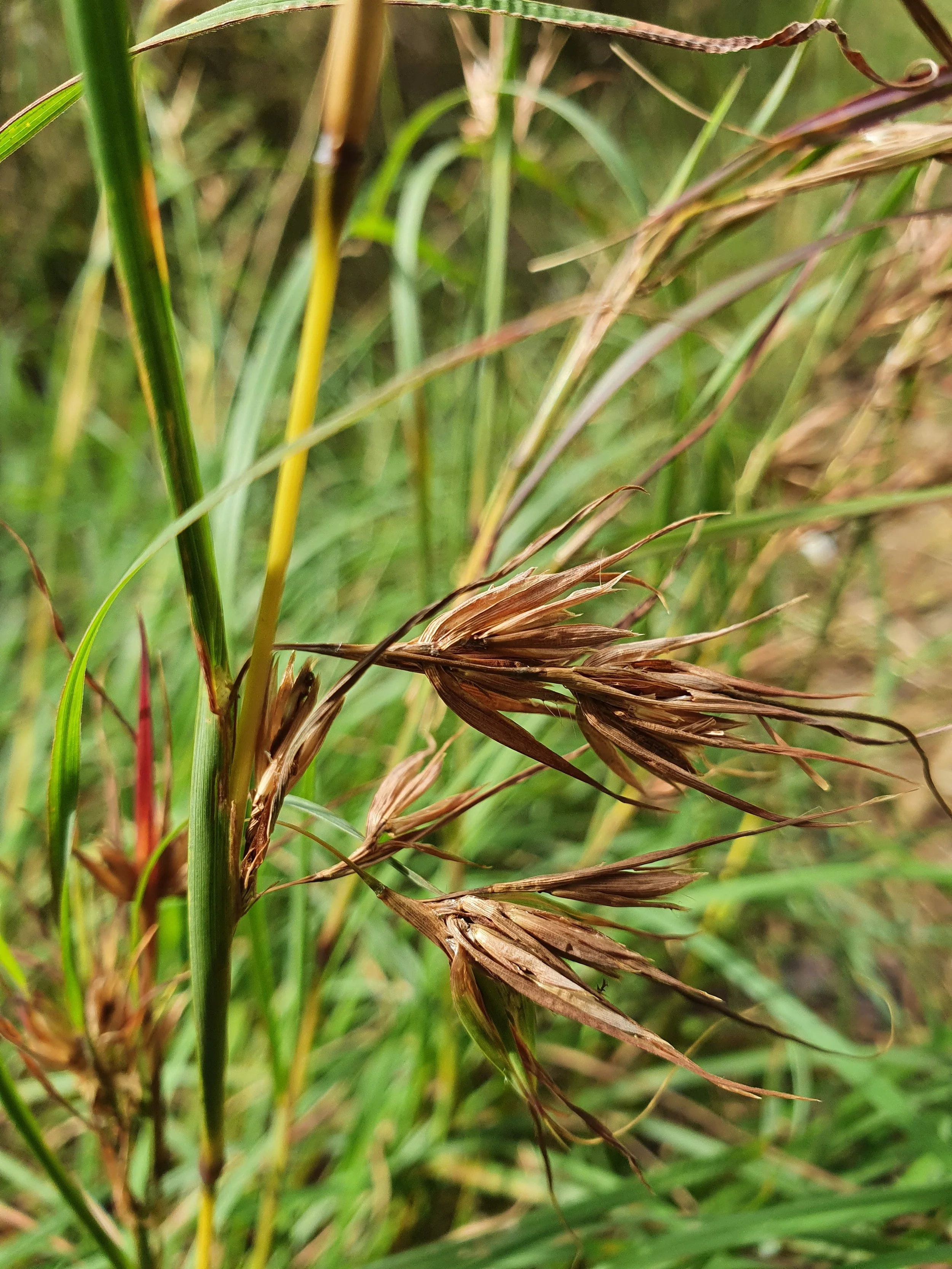
In coastal areas, Kangaroo Grass is reduced to more of a prostrate ground cover, instead of tall, leafy tussocks. It has lovely green foliage, with the seed heads turning a beautiful glowing reddish-brown/russet red around October to November. This beautiful colour can glow in the sunlight. The seed heads, called spikelets, occur on branched stems.
Spikelets have long, distinguishing spathes at their base and bare florets with black awns 4–7 cm long. These remain attached to the seed when it falls, with the awn actually corkscrewing from the main plant into the ground. After this glow of colour is when we can collect some seed to propagate for our site.
It has been found that approximately two-thirds of the seed collected from one inflorescence can be infertile. It can be difficult to distinguish infertile seeds from fertile seeds, as both turn brown and retain their awns. Generally, fertile seeds are larger, but overall, Kangaroo Grass has a low success rate of propagation.
-
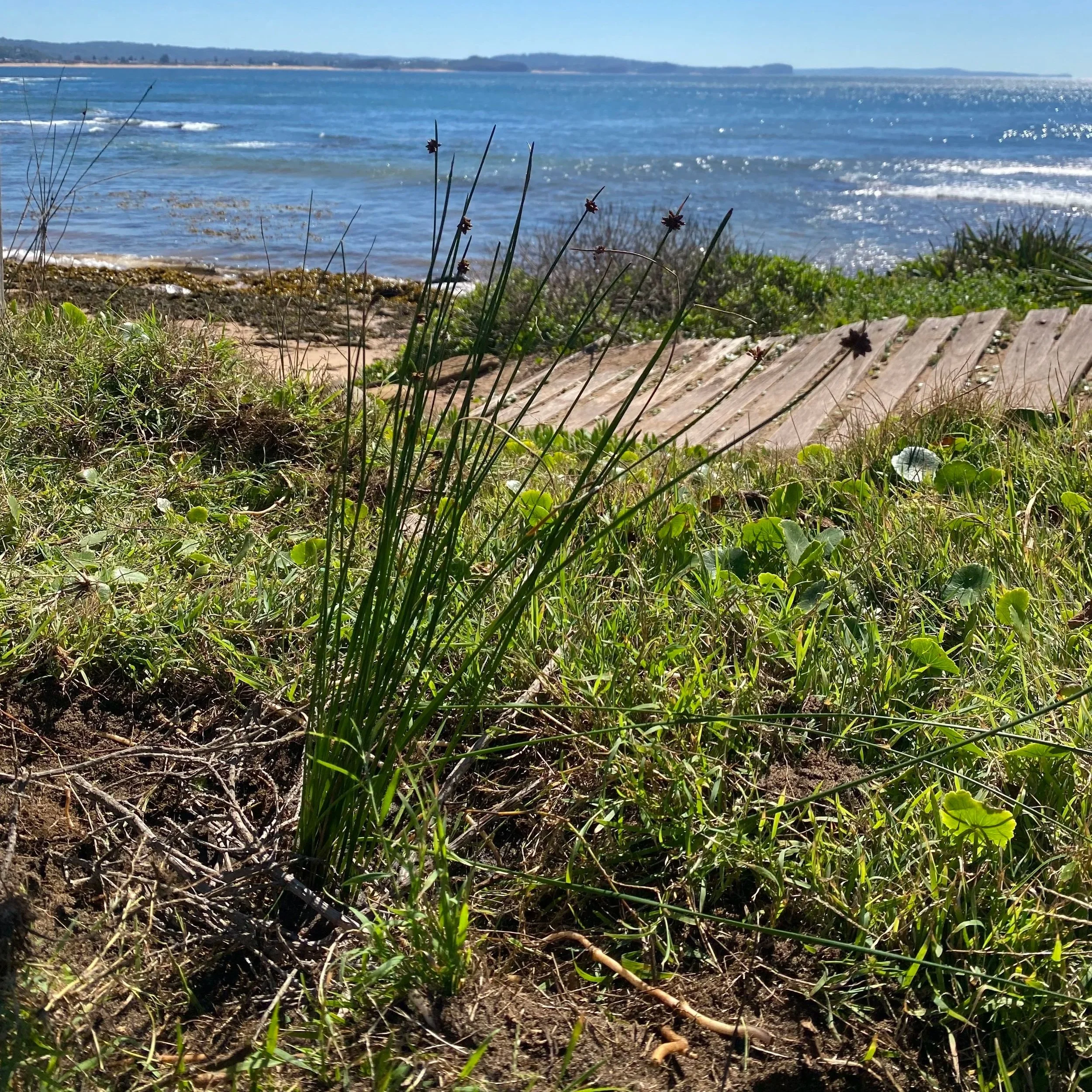
Knobby Club Rush or Knotted Club-rush
Scientific name: Ficinia nodosa (previously known as Isolepis nodosa)
Family: Cyperaceae
Status: Not considered to be at risk in the wildGeneral Information: A resilient perennial plant native to the Southern Hemisphere, particularly found in coastal and wetland areas. This long-living rush is widespread, often growing on the edges of coastal lagoons, seas, lakes, and in the sand dunes of beaches, where it can handle frontline exposure to salt laden winds.
Ficinia nodosa is a rhizomatous perennial (the sedge family). It typically grows to heights of 15–220 cm. It is characterised by its knobby nodes along the stems, which contribute to its common name. The inflorescence consists of small, spike-like clusters of flowers that appear primarily during the warmer months, particularly from September to December in the Southern Hemisphere. The fruit is found within the flower head.
The plant propagates easily from seed, but will also spread through its rhizomes, which makes it a really good plant for soil stabilisation, which is what is required on our eastern exposed sand dunes at Long Reef Point.
This grass will grow in moist or wet sandy soils, beach sands and gravelly soils, and is found along the coasts of other Australian states. Once established, this species is drought tolerant... however, it is unable to grow in areas of Bitou bush or Acacia longifolia (the coastal or long-leaved wattle), due to chemicals in the roots of these two plants.
-
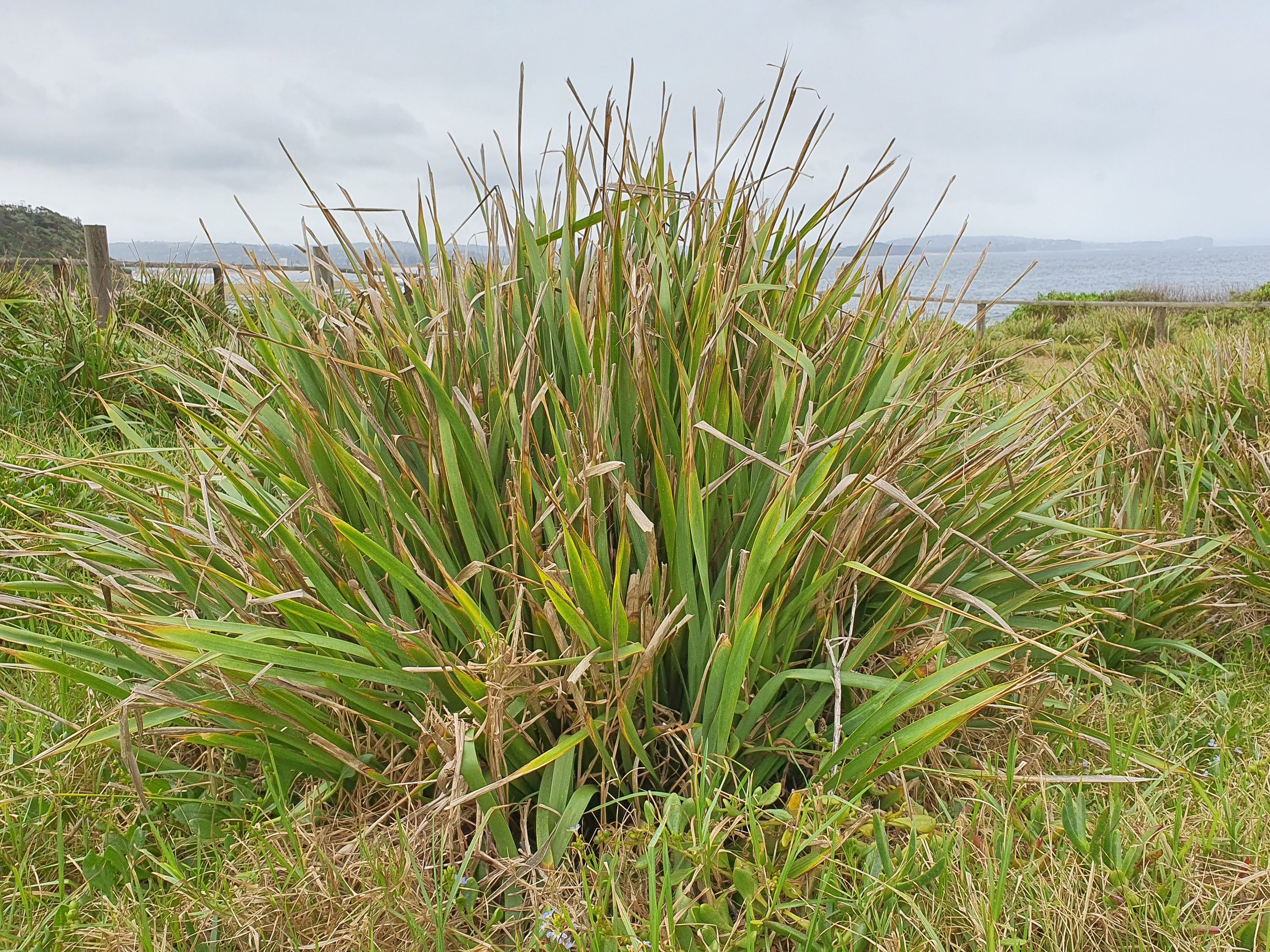
Spiny-head Mat-rush, Spiky-headed Mat-rush or Basket Grass
Scientific name: Lomandra longifolia
Family: Asparagaceae
Status: Not considered to be at risk in the wildGeneral Information: Lomandra comes from the Greek, Loma, which means edge or border, and andra, which means ‘man’. Longifolia – is derived from longi- (Latin) for ‘long’ and folia, which is Latin for ‘leaf’. Because of the rather ‘spiky’ leaves, it is often used as a border plant along tracks to keep the public … on the track!
It is native Australia-wide except for the N.T. & W.A. This is a good, tough perennial which will grow in almost any climate, soil, location or situation. It can grow in a range of sandy soils, in swamps and wet places to the montane zone on banks of creeks, rocky hillsides, cliffs and open forests. It has a very high tolerance to frost, drought, heat, and dryness, which is great for our site at Long Reef. It occurs naturally here, which is great as it’s good for erosion control and weed suppression. Tube stock are propagated from the plants on site. They are tiny seeds which are put into a seedling tray and then, when big enough, transferred to a tube and grown until ready to bring out to site.
The female flower is often a little bit longer or larger than the male flower. The heavy-smelling nectar on flowers can attract pollinating beetles. Flowering occurs in warm temperatures (late winter/early spring), and fruiting occurs 1-2 months after flowering. Aboriginal people use the leaves of L. longifolia to make strong nets and baskets, and they consume the base of L. longifolia leaves as food.
-
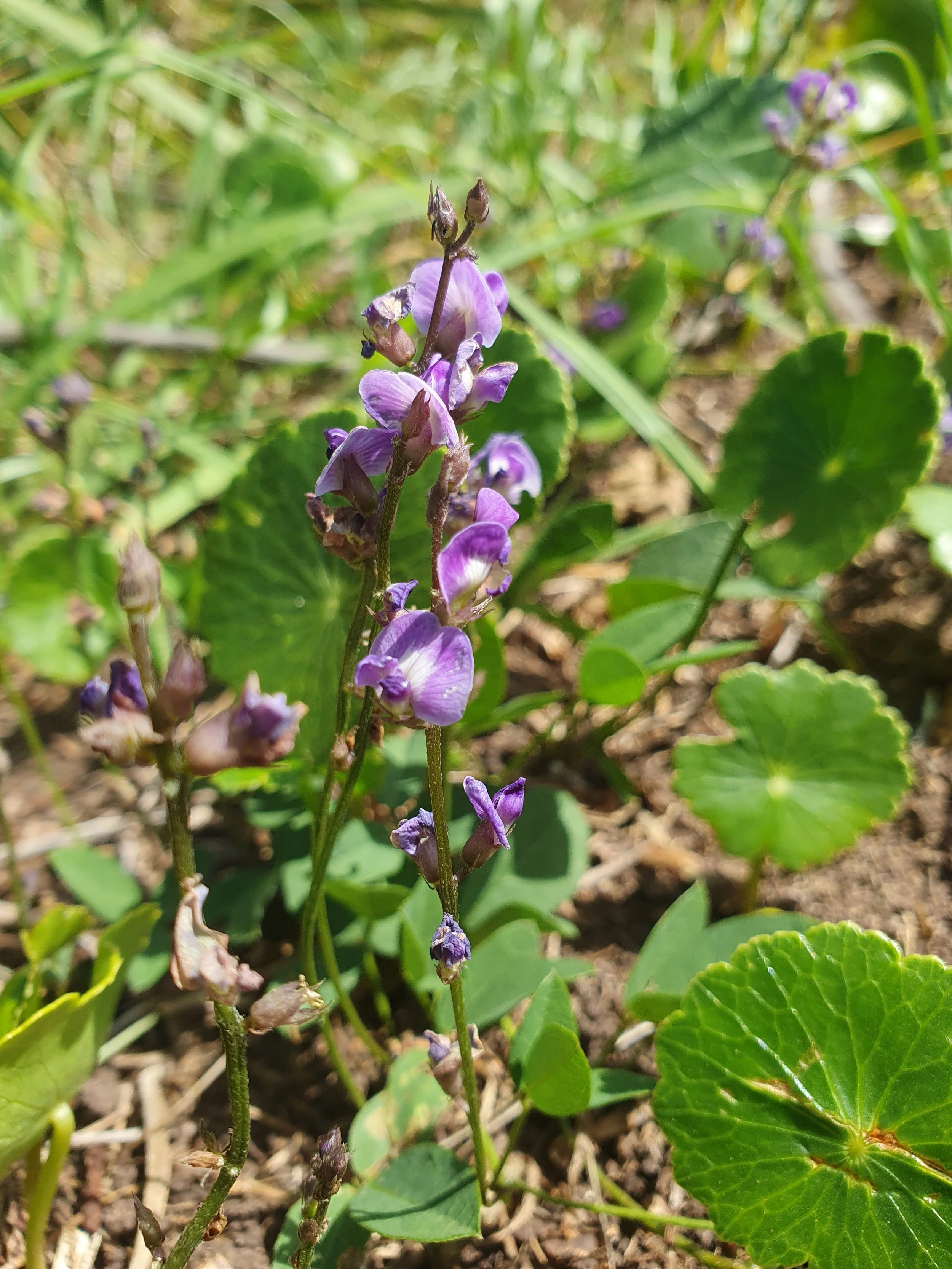
Twining Glycine or Love Creeper
Scientific name: Glycine clandestina
Family: Fabaceae
Status: Not considered at risk in the wildGeneral Information: Glycine clandestina, commonly known as twining glycine or love creeper, is a scrambling plant in the bean family, found in Australia. Glycine is a genus of about 25 species, most of which are found only in Australia but several species occur in East Asia and the Pacific islands. It is variable in leaf size and shape, hairiness and flower size and colour. The leaves are arranged alternately on the stems and are 3-foliolate with the middle leaflet usually longer in length than the other two.
-
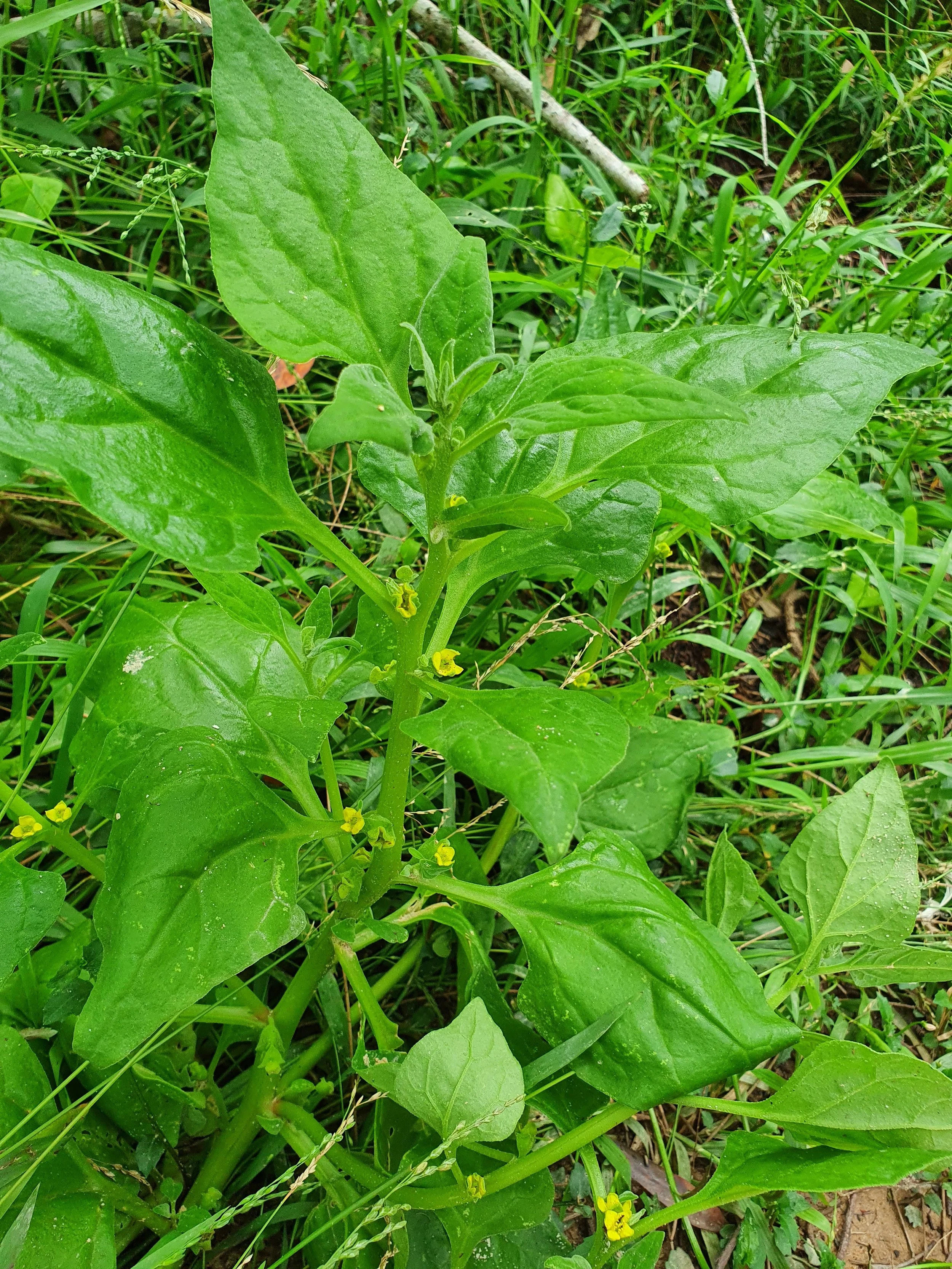
Warrigal Green or Native spinach
Scientific name: Tetragonia tetragonioides
Family: Aizoaceae
Status: Not threatenedGeneral Information: This Australian native spinach and creeping herb is a great ground cover and does well in Long Reef’s sandy soils. Once established, it is great for preventing erosion on the steep sandy slopes. The species name tetragonus means “four-angled” and refers to the shape of the plant’s fruits, which are initially succulent but become dry and woody as they age.
Warrigal Green is a sprawling leafy green herb plant which grows around 50cm high, trailing around 1-2 metres long and will grow in sunny to shady spots. Reefcare is lucky to have this plant on site. It grows well on our exposed south-western slope, where it provides valuable ground cover to help prevent erosion. Warrigal Green tolerates poor soils, which probably accounts for it surviving on our sandy soil, but this plant does do better when kept moist in a rich, free-draining loam. It may die back during a bad Winter, but will revive itself in the Spring.
Warrigal Green has been used as a spinach substitute since early European colonisation in Australia, as it has a mild, spinach-like flavour with a hint of saltiness. Captain Cook had this plant collected and cooked for his crew, which successfully warded off scurvy, as it is significantly high in vitamin C and also contains calcium and phosphorus. Joseph Banks took seeds of this plant to Kew Gardens in 1771, making Warrigal Green the first Australian food plant cultivated abroad.
The small, new leaves are best blanched or cooked before eating and are good in salads or sautéed with garlic and olive oil. They can also be added to soups, stews and omelettes. The small yellowish flowers which appear in spring and summer, can also be eaten.
-
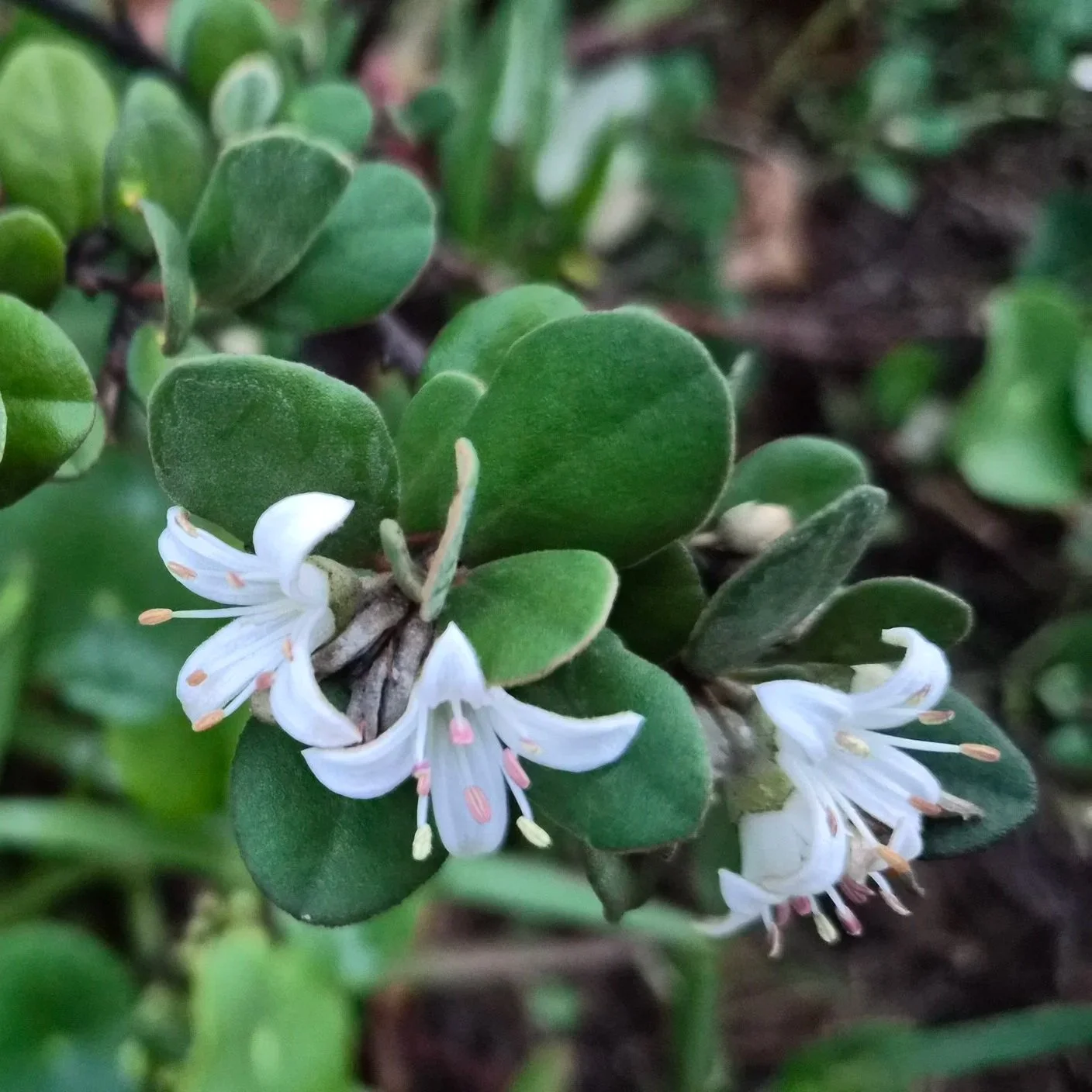
White Correa
Scientific name: Correa Alba
Family: Rutaceae
Status: Not considered to be at risk in the wildGeneral Information: This very hardy small shrub of Australian native plants is successful in most reasonably drained soils in full sun or semi-shade and is endemic to south-eastern Australia. It is very resistant to salt spray and is tolerant of at least moderate frosts. Once established it is tolerant of extended dry periods.
Correa alba will grow to around 1–1.5 m in height and width. The leaves are oval-shaped and greyish in colour, with the undersurface covered in short hairs. The flowers are white, with four united petals and eight stamens that are shorter than the petals. Flowering occurs around Autumn and Winter and provides food for nectar eating birds and other insects.
Like most members of the Rutaceae family, propagation from seed is difficult, but cuttings usually strike very readily from the current season's growth. Reefcare has found that some plants only live around 15 years, but we also find that it does self-propagate on our site quite well. It has also been used as a tea substitute.
-
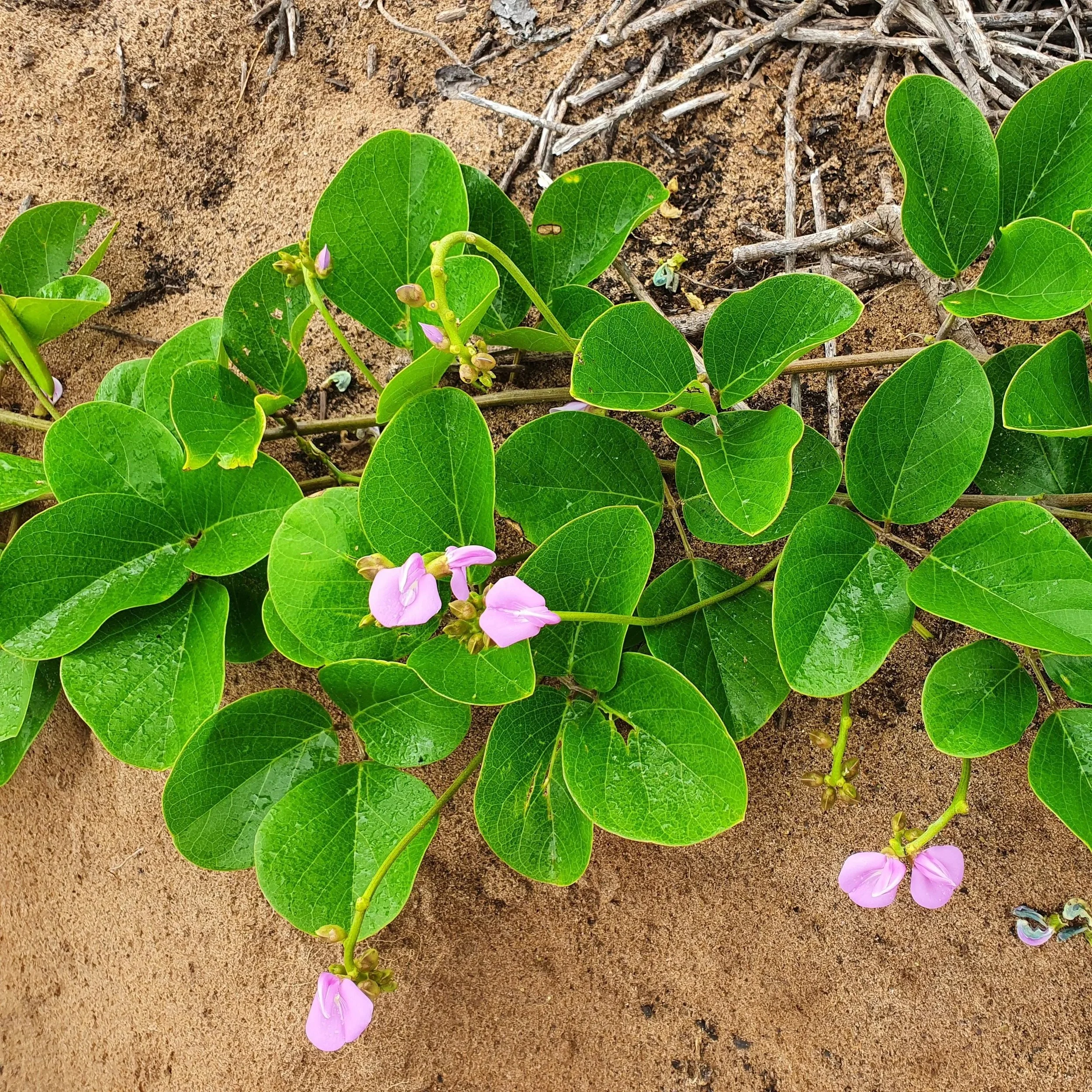
Beach Bean, Bay Bean or Seaside jack-bean
Scientific name: Canavalia rosea
Family: Fabaceae
Status: Not considered to be at risk in the wildGeneral Information: The Beach Bean is a trailing, herbaceous, evergreen vine that can form mats of foliage that reach a length of more than 6m. It becomes somewhat woody with age, and the flowers are a lovely purplish pink colour with white centres that guide insects to their nectar. The thick and leathery leaves will fold in on themselves in response to hot weather. The flat pods are quite long (as can be seen in the photo), 10.2–15.2 cm and become prominently ridged as they mature. The seeds are buoyant and impermeable to water – this buoyancy allows them to be distributed by ocean currents. This may account for the first one found at Long Reef being on a sand dune closest to the ocean, which was open to the regular NE winds that this area receives. This would also account for this plant being one of the most widely distributed beach plants in the world from the West Indies, the Americas, Africa, Asia, the Pacific Islands, and of course here in Australia.
The Beach Bean inhabits upper beaches, cliffs, and dunes throughout the world's coastal tropics. Being fast-growing and mat-forming, the Beach Bean resists erosion by wind and light surf, which makes it a great groundcover along coastal dunes. It is highly salt tolerant and prefers sandy soils, so it is in the perfect location at Long Reef. This species has a symbiotic relationship with certain soil bacteria, which form nodules on the roots and fix atmospheric nitrogen. It is a great sand binder on beaches. According to the Useful Tropical Plants website (click 'View Plant Profile'), it has quite a number of Edible and Medicinal uses, however, the seeds and seed pods are poisonous if consumed.
-
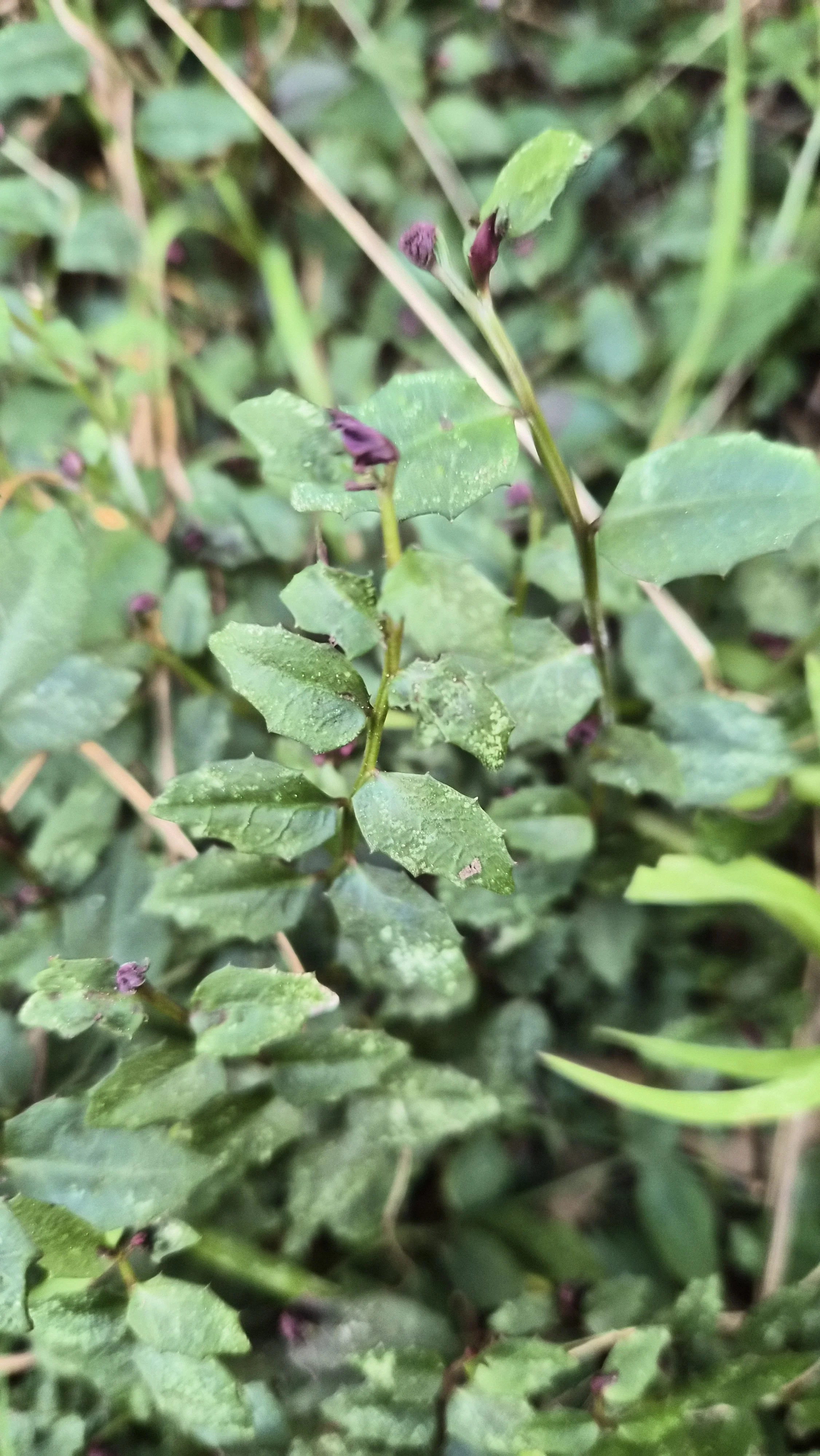
Purple Prata or White Root
Scientific name: Lobelia purpurascens
Family: Campanulaceae
Status: Endangered in VictoriaGeneral Information: Lobelia purpurascens—also known as white root or purplish pratia—is a distinctive creeping perennial, rhizomatous herb native to Eastern Australia. It has smooth, creeping, scrambling or prostrate usually under 12cm tall with stems often reaching 30cm, producing white rhizomes; hence one of it’s common names. The stems may hug the ground or stand upwards.
Naturally occurring in shady habitats, grasslands and moist areas of woodland or wet sclerophyll forests, across New South Wales, Queensland, and Victoria; it is found at Long Reef in sheltered spots in our wooded areas.
The leaves have toothed margins and are alternately arranged, elliptic to oval, 10–25 mm long, lower surface typically purplish, hence the colour being recognised in both the classification name and two of the common names.
Flowers are unisexual, with male and female flowers on separate plants. Male flowers have anthers which are completely smooth without hairs except the lowest ones with 1 or 2 apical bristles; ovary rudimentary. Female flowers have smaller sterile anthers; ovary 2–4 mm long. The flowers are single on the end of long stalks. The delicate single flower occurs from October to June and can be pale purplish pink, bluish to lilac, some can be white to pale mauve‑pink. The fruit are 3–10 mm long, 3–6 mm wide, glabrous, and open in 2 valves.
Written by Lisa Calder
Photographs by Lisa Calder
Updated 2026