
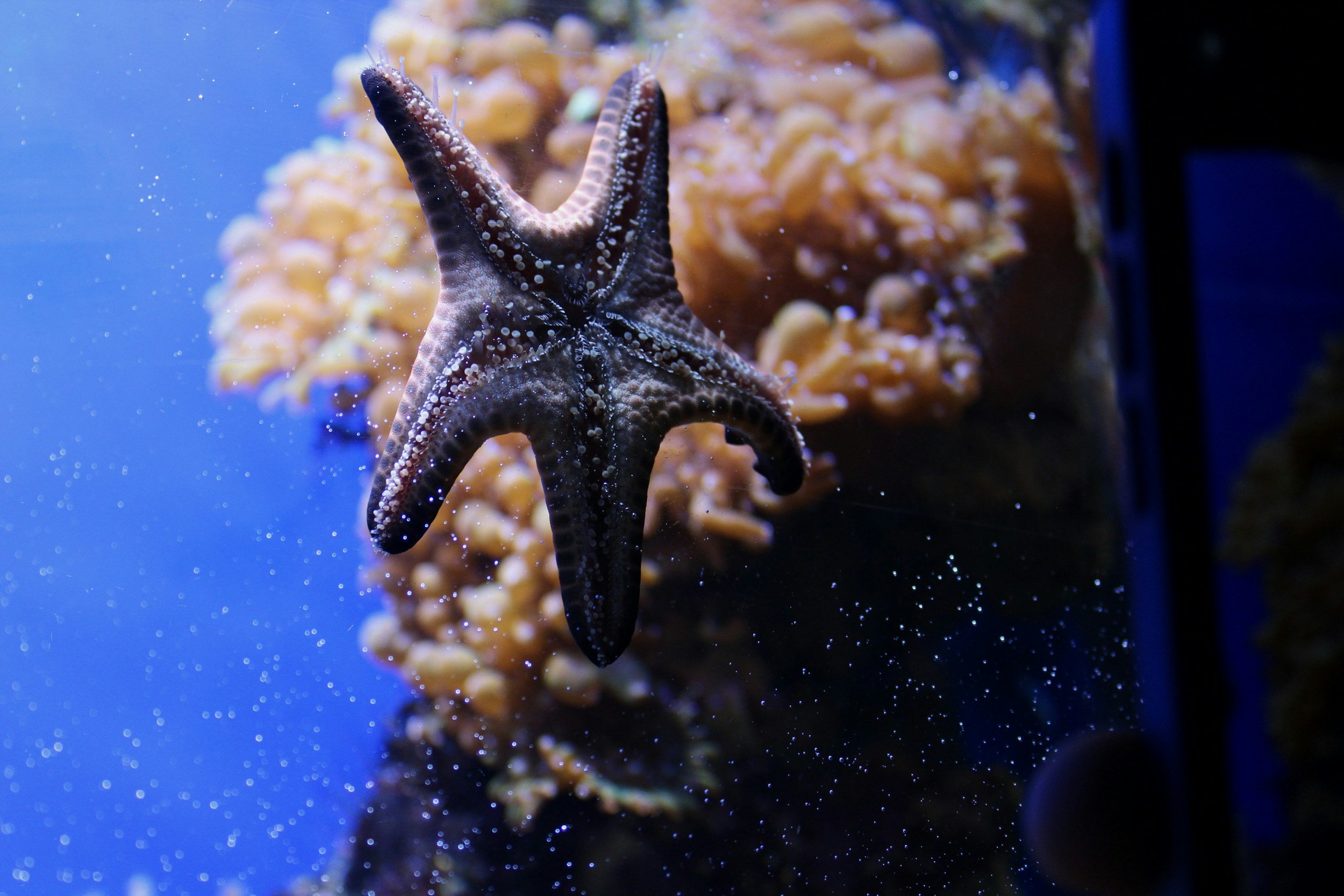
Marine Life of Long Reef
Preserving Diversity: Long Reef's Vital Marine Habitat
Long Reef, situated along Sydney's Northern Beaches, boasts a vibrant marine ecosystem teeming with diverse life forms.
This coastal stretch is a haven for an array of marine species, including vibrant fish like surgeonfish and wrasse, alongside intriguing invertebrates such as anemones, sea stars, and crabs. The rocky reefs are adorned with Neptune's Necklace and other seaweeds, offering refuge to countless juvenile crustaceans and mollusks.
Ongoing conservation efforts led by local initiatives like Reefcare are crucial in safeguarding this marine paradise, ensuring its resilience amidst environmental challenges and preserving its beauty for future generations to appreciate and explore.
-
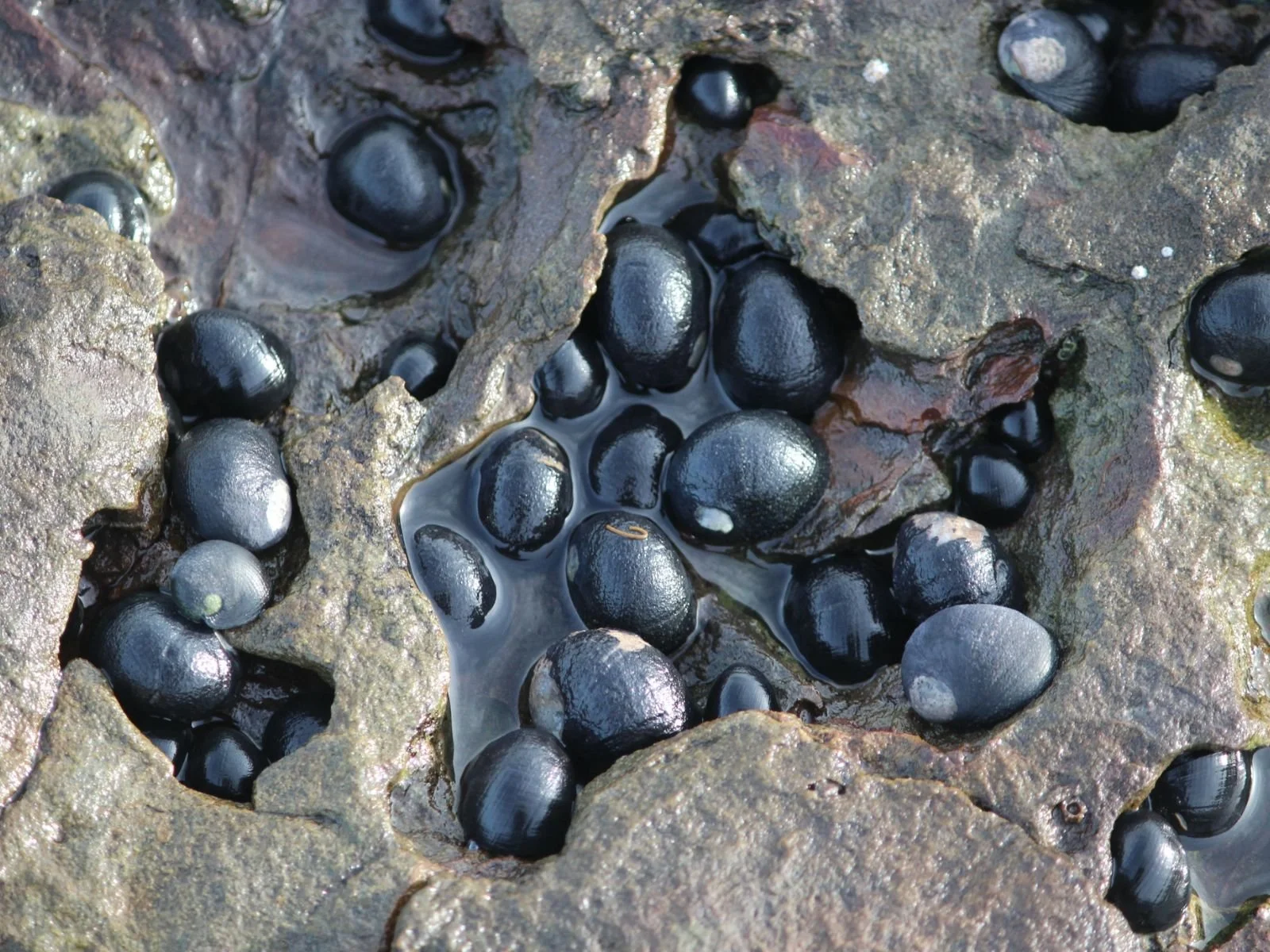
Black Nerites
Scientific name: Nerita melanotragus
Family: Neritidae (Nerites)
Status: No conservation statusN. melanotragus is abundant on Long Reef’s rock platform and in intertidal zones stretching from Queensland to Victoria and Tasmania. The almost identical species, N. atramentosa, is not present at Long Reef, but care should be taken to identify the correct species where their range overlaps in Vic and Tas. When the tide is out, their black colour helps them camouflage, and they become inactive, sealing their operculum (flap) to trap water inside, preventing water loss when they are exposed to extreme conditions. When they are submerged, they become active again, using their muscular foot to attach to rocks, using their radula to feed by scraping algae off rocks, and using their gills to extract oxygen from the water.
-
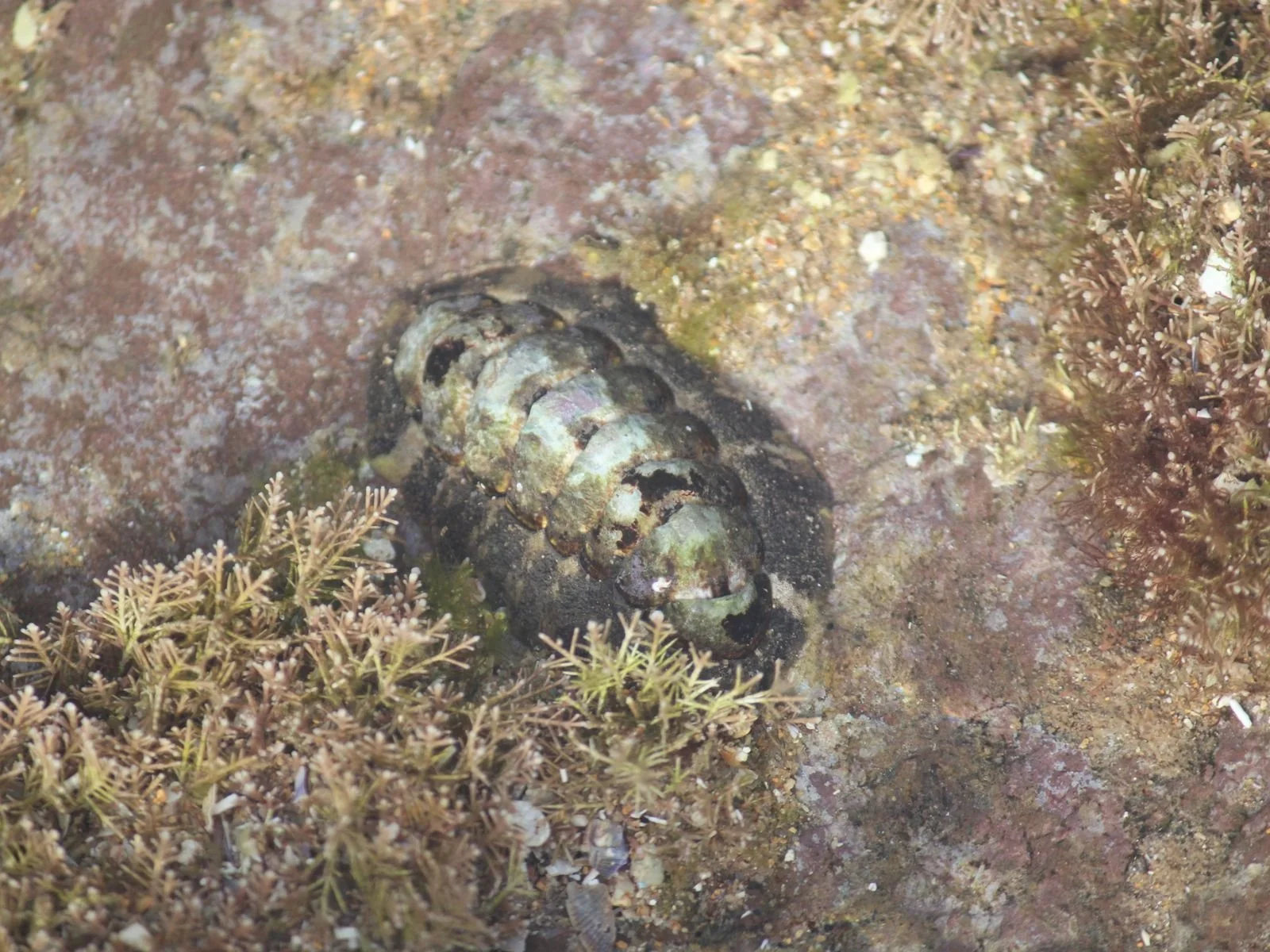
Chitons
Class: Polyplacophora
Species: There are 150 species of chiton in Australia, and 90% are endemic (only found in Australia). Some of the most common found at Long Reef include Oak Chitons (Onithochiton quercinus), Austral Chitons (Ischnochiton australis) and Snakeskin Chitons (Sypharochiton pelliserpentis).Chitons are common at Long Reef, but they can sometimes be hard to find as they prefer to hide under rocks and in crevices. They have primitive ‘eyes’ that are able to detect light and dark, which allows them to find these safer areas. They have eight overlapping plates and a strong muscular foot to attach to rocks, which help to protect the chiton from predators and wave action. Seastars, crabs, shorebirds, and other creatures feed on them while the chiton itself feeds on algae, using their radula to scrape it off rocks.
-
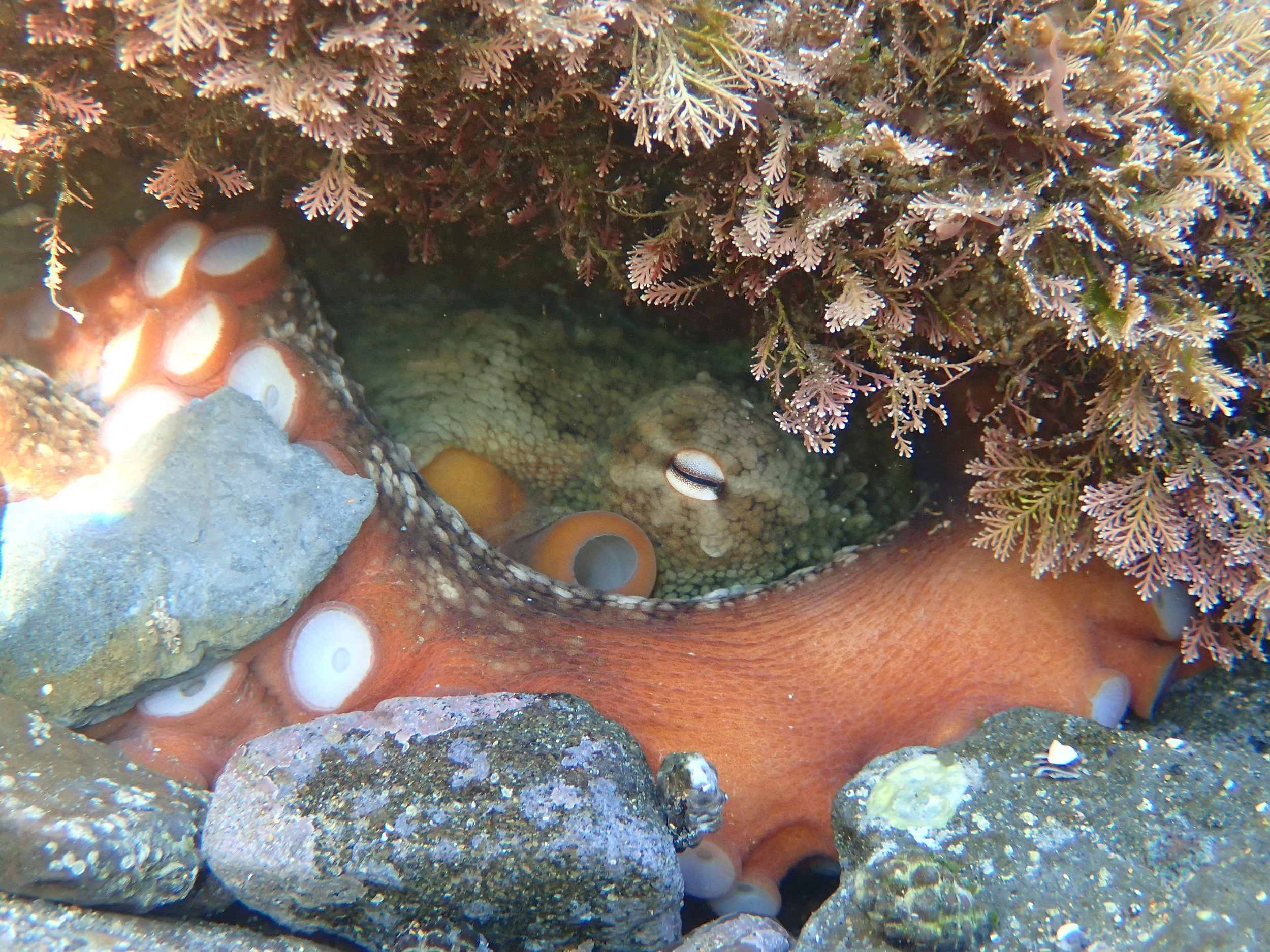
Common Sydney Octopus
Scientific name: Octopus tetricus
Family: Octopodidae (Typical octopuses)
Status: Least Concern (LC)Common Sydney Octopus can be found hiding in crevices during low tide at Long Reef, as well as the ocean in eastern Australia and NZ. They can be hard to spot as they can change the colour of their skin and shape to camouflage, but looking for their distinctive white eyes with a horizontal slit can be used to try and spot one. Another defence mechanism they use is jet propulsion to quickly escape. They feed at night using their tentacles and sharp beak to feed on crabs, molluces and other octopi. They are territorial and in the day they guard their lair that often has drilled shells of its prey outside which can also be used to spot one. After females mate they sometimes eat the male and then attach their eggs to the ceiling of rock crevices.
-
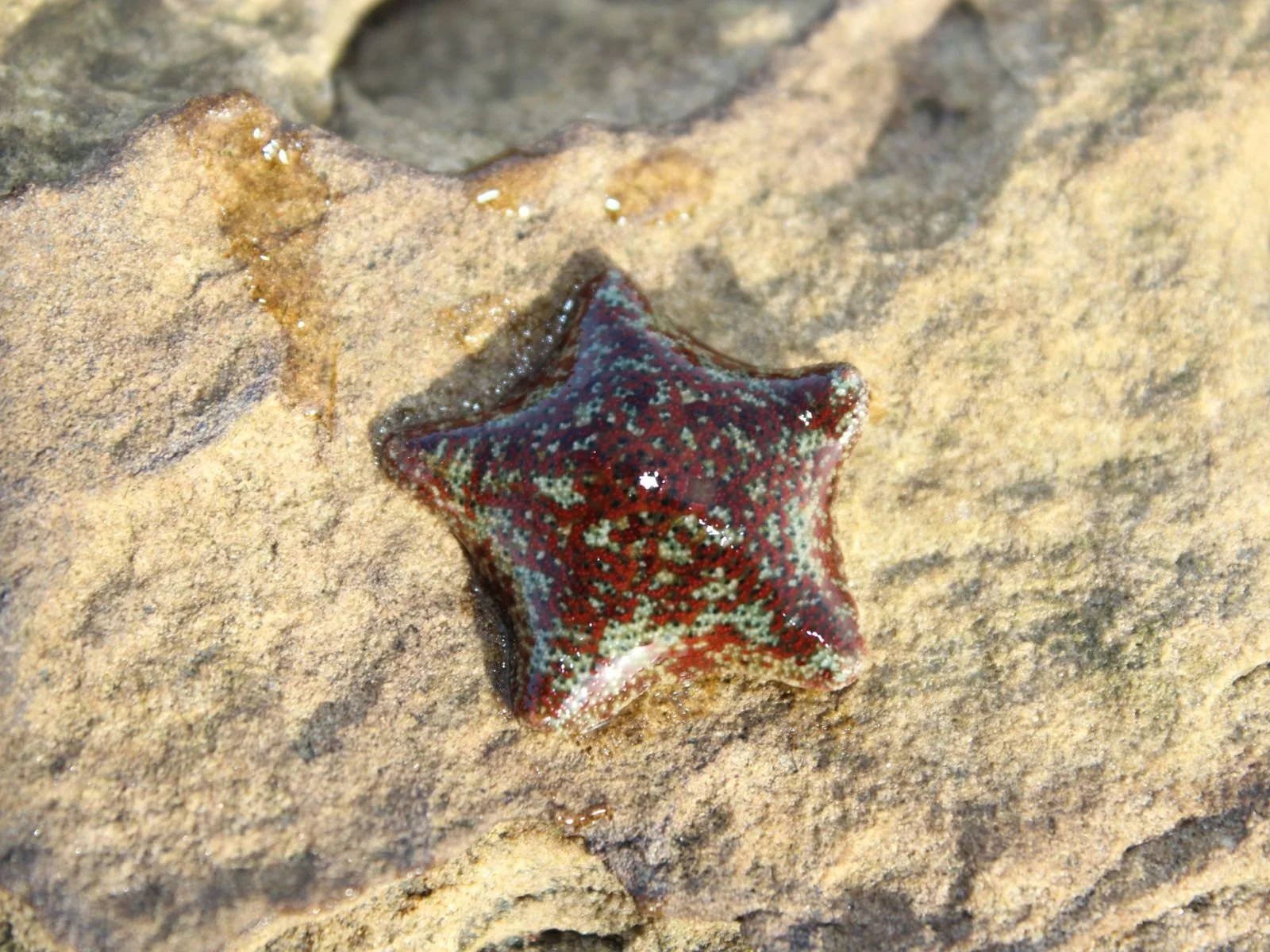
Dwarf Cushion Star
Scientific name: Parvulastra exigua
Family: Asterinidae (Sea Stars)
Status: No conservation statusThe Dwarf Cushion Star is abundant on Long Reef’s rock platform, and has a range that spreads throughout southern temperate intertidal zones, including South Africa and Australia. It is a tiny, flattened sea star that usually has five arms, however this species is being threatened by rising temperatures from climate change. They ideally breed in water with a temperature of 16-18°C, but as it rises, their offspring have a higher chance of developing abnormalities like extra arms, reaching 86% of offspring at 26°C, and will die beyond this. Their diet consists of microscopic algae caught by extruding the stomach through the mouth onto surfaces. They lay eggs under rocks, which hatch into starfish, skipping the larval stage.
-
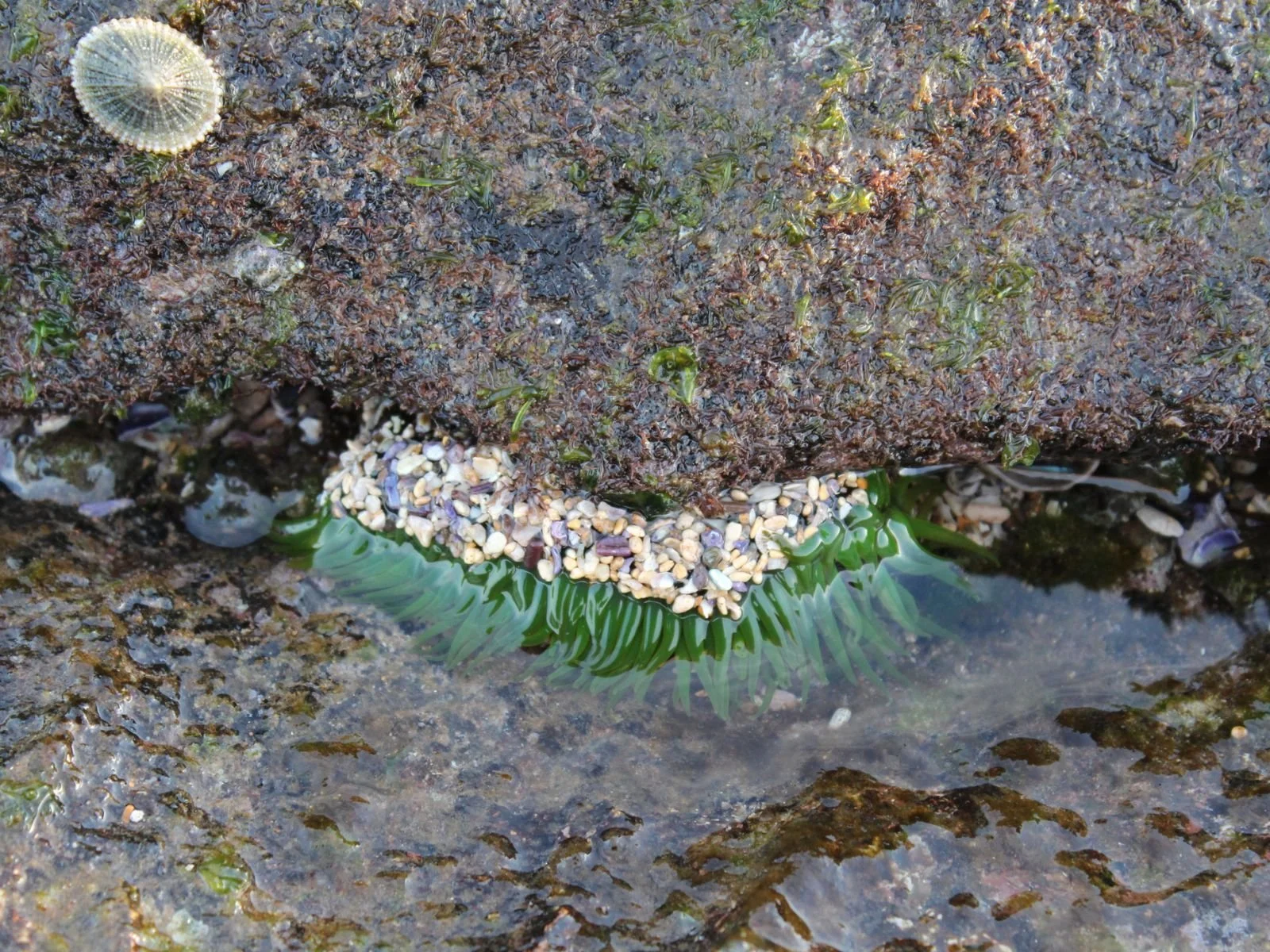
Green Snakelock Anemone
Scientific name: Aulactinia veratra
Family: Actiniidae (Sea anemones)
Status: No conservation statusThe Green Snakelock Anemone can be found in rocky areas from the mid-tide level to a depth of 3m, throughout the southwest Pacific and southeast Indian Oceans. It prefers to live under overhangs, in crevices and between boulders, attached to a rocky substrate but it can look like it is slightly buried in sand. It most commonly has bright green tentacles, but some can be red, black or brown. They can have 24-124 individual tentacles, and have a height of about 20mm, but some can reach up to 60 mm when extended. When the tentacles are retracted, the surface of the anemone often has shell fragments or sand adhered to it for camouflage. This feature can often look similar to the appearance of the Speckled Rock Anemone (Oulactis muscosa).
-
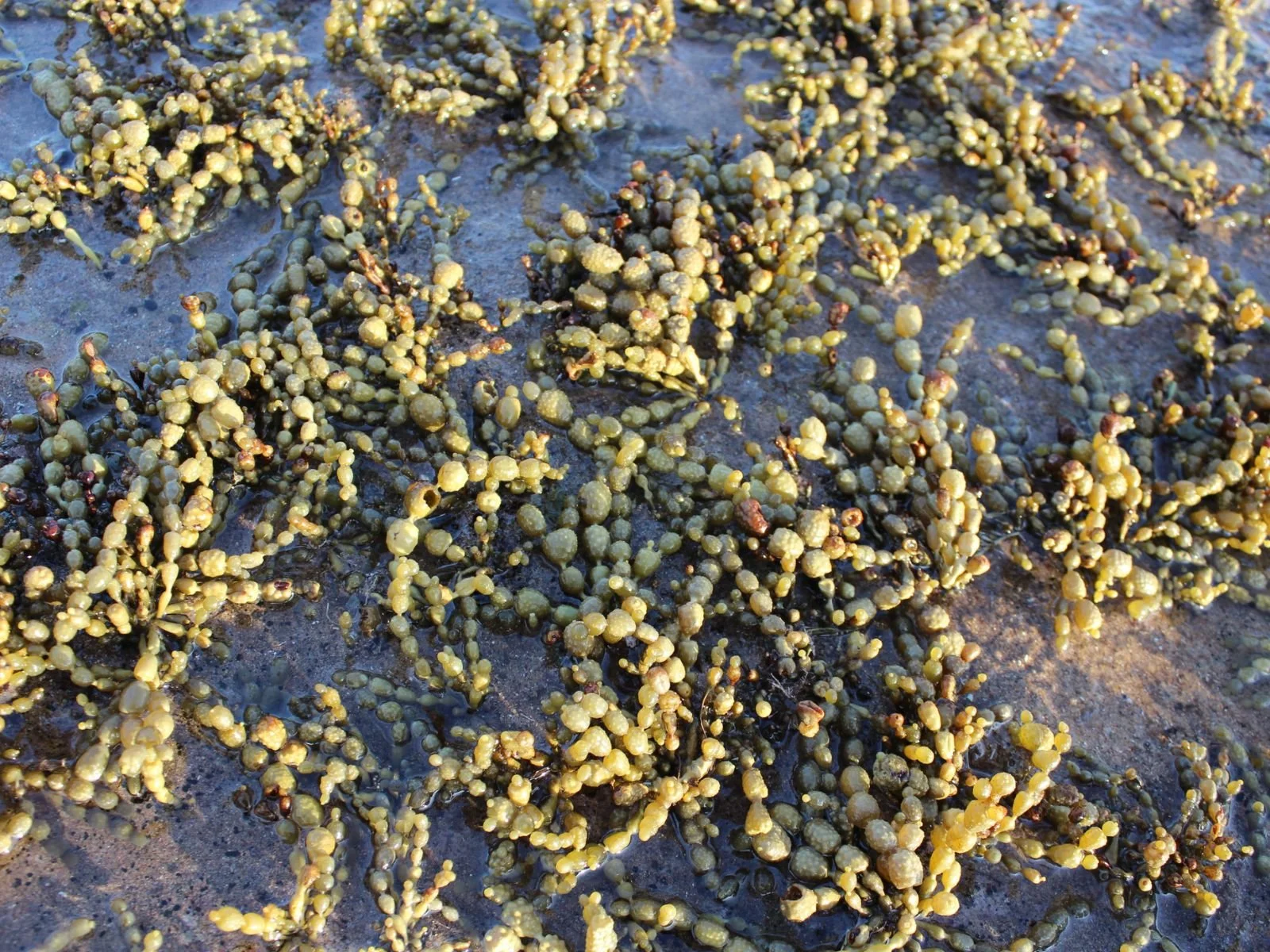
Neptune’s Necklace
Scientific name: Hormosira banksii
Family: Hormosiraceae (Hormosira banksii is the only species in this family)It is a type of brown algae shaped like a green beaded necklace, which covers a large section of the north-eastern part of Long Reef rock platform. They grow in groups to trap water for low tides, and they store water in each bladder (‘bead’), as well as a slime coat to prevent water loss. It attaches to rocks and can grow up to 30cm long, but they can use their air filled bladders for buoyancy to remain at the surface and continue photosynthesis. They are vital in intertidal ecosystems as they provide nutrient rich food sources for urchins, crustaceans, and fish. It also provides important habitats that allows organisms like chitons, crabs and sea stars to hide from predators and remain in a high moisture environment during low tide.
-
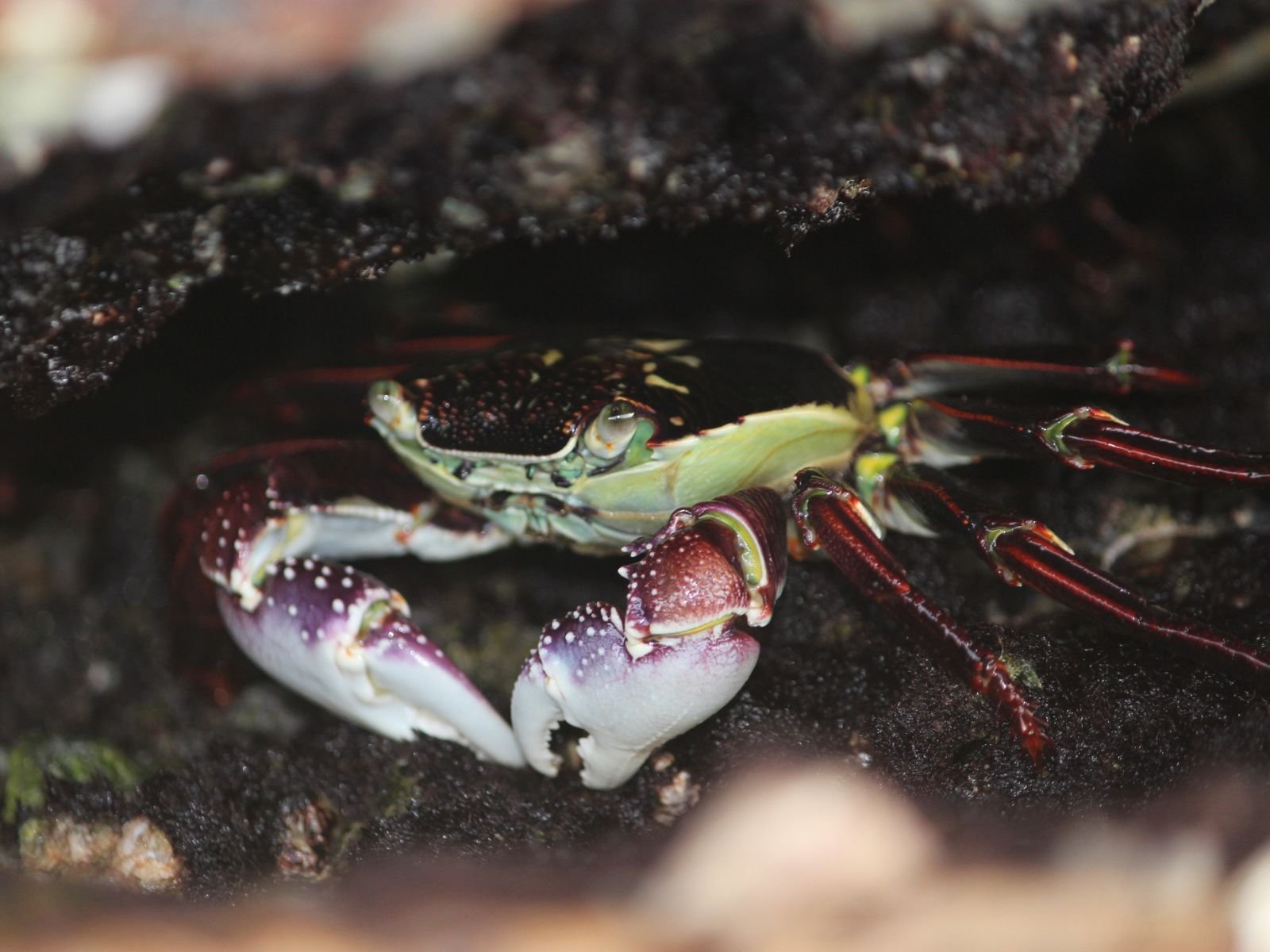
Purple Rock Crab
Scientific name: Leptograpsus variegatus
Family: Grapsidae (Shore Crab)
Status: No conservation statusThe Purple Rock Crab, also called the Swift-footed Crab, is abundant on rocky shores throughout the southern subtropical Indo-Pacific, including Long Reef. Its shell can grow to 50 mm and this crab is mainly dark purple or red but can exhibit a range of different colours including white and green. They are opportunistic scavengers that use their claws to crush prey or catch food, including limpets, barnacles and algae, so they prefer to inhabit the upper intertidal zone. From a distance they can appear in the open feeding, but if they detect the slightest movement they dart back into the cover of rock crevices and plants. This allows them to survive predation from birds, other crabs, fish and other marine life.
-
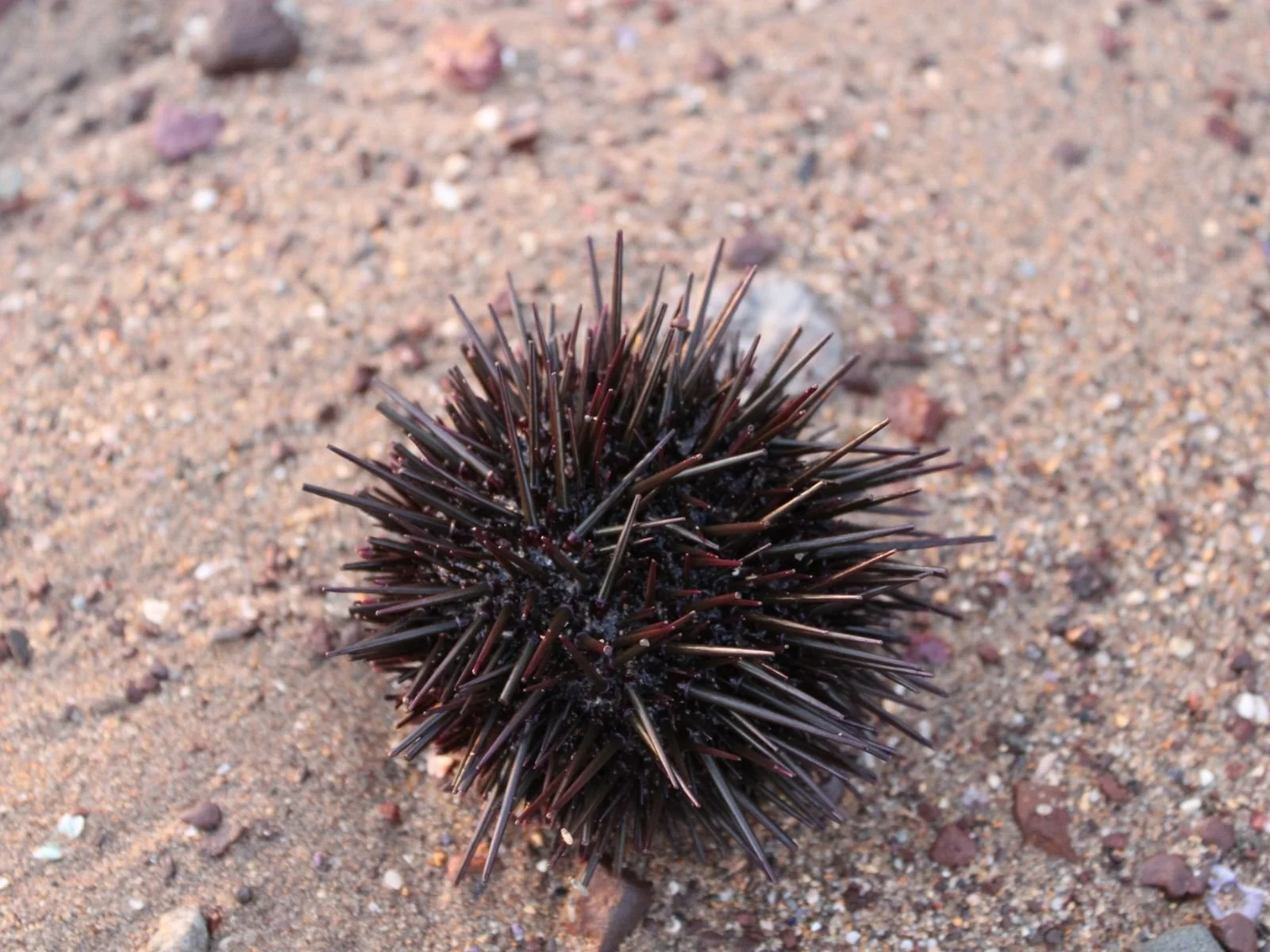
Purple Sea Urchin
Scientific name: Heliocidaris erythrogramma
Family: Echinometridae (Sea Urchins)
Status: No conservation statusThe Purple Sea Urchin, also called the short-spined sea urchin or western pacific purple sea urchin, can be found along the southern and eastern coasts of Australia and including Sydney. They live in coastal waters above a depth of 35 m, including intertidal zones such as rocky shores, seagrass beds, and sandy mud seabeds. They often cluster together and use their spines to burrow into rocks for protection, and they can form urchin barrens if too abundant. This species feeds by scraping rocks for algae and seagrasses as well as catching drifting plant matter using their tube feet and mouth located under the body. Their body and spines range in colour, but you can tell this species apart from the long-spined sea urchin as it has much shorter and sturdier spikes.
-
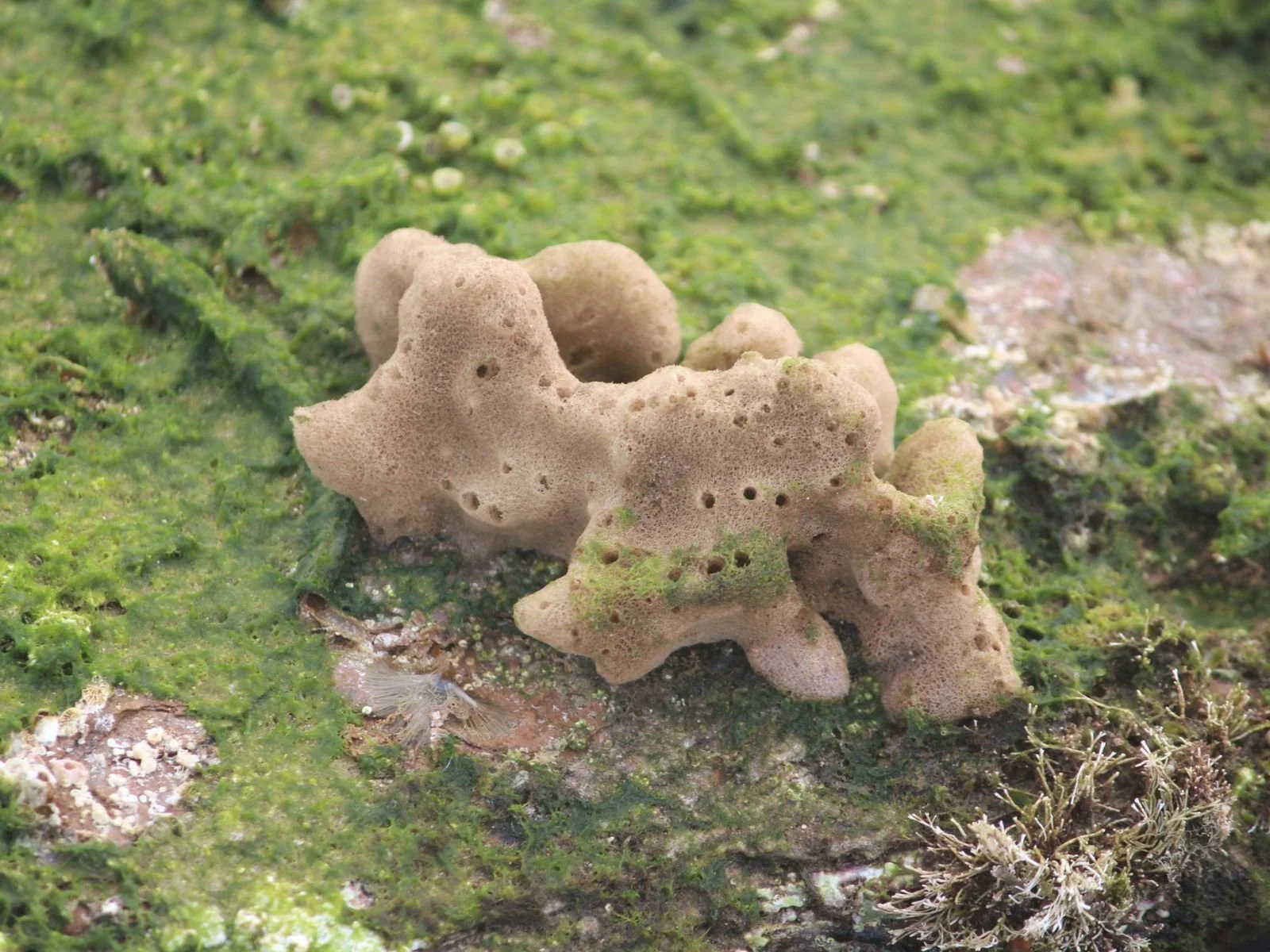
Sponges
Phylum: Porifera (sea sponges)
Species: ~10,000 species globally and ~160 species in the Sydney regionAlthough sponges often look like plants, they are actually multicellular, colonial animals. They lack true tissues and organs, and instead are sessile filter feeders that use specialised cells called cilia to feed on food particles in the water, also purifying the water. Sponges also importantly provide habitat for a variety of marine life and get their structures from spicules that are hard, multi-pointed rods usually made of silica or calcium carbonate. Most predators avoid sponges due to these spicules and the toxins that some sponges produce. Most sponges are hermaphrodites, meaning they produce sperm and eggs, which turn into larvae once the eggs are fertilised, allowing them to colonise new areas despite being sessile as adults.
-
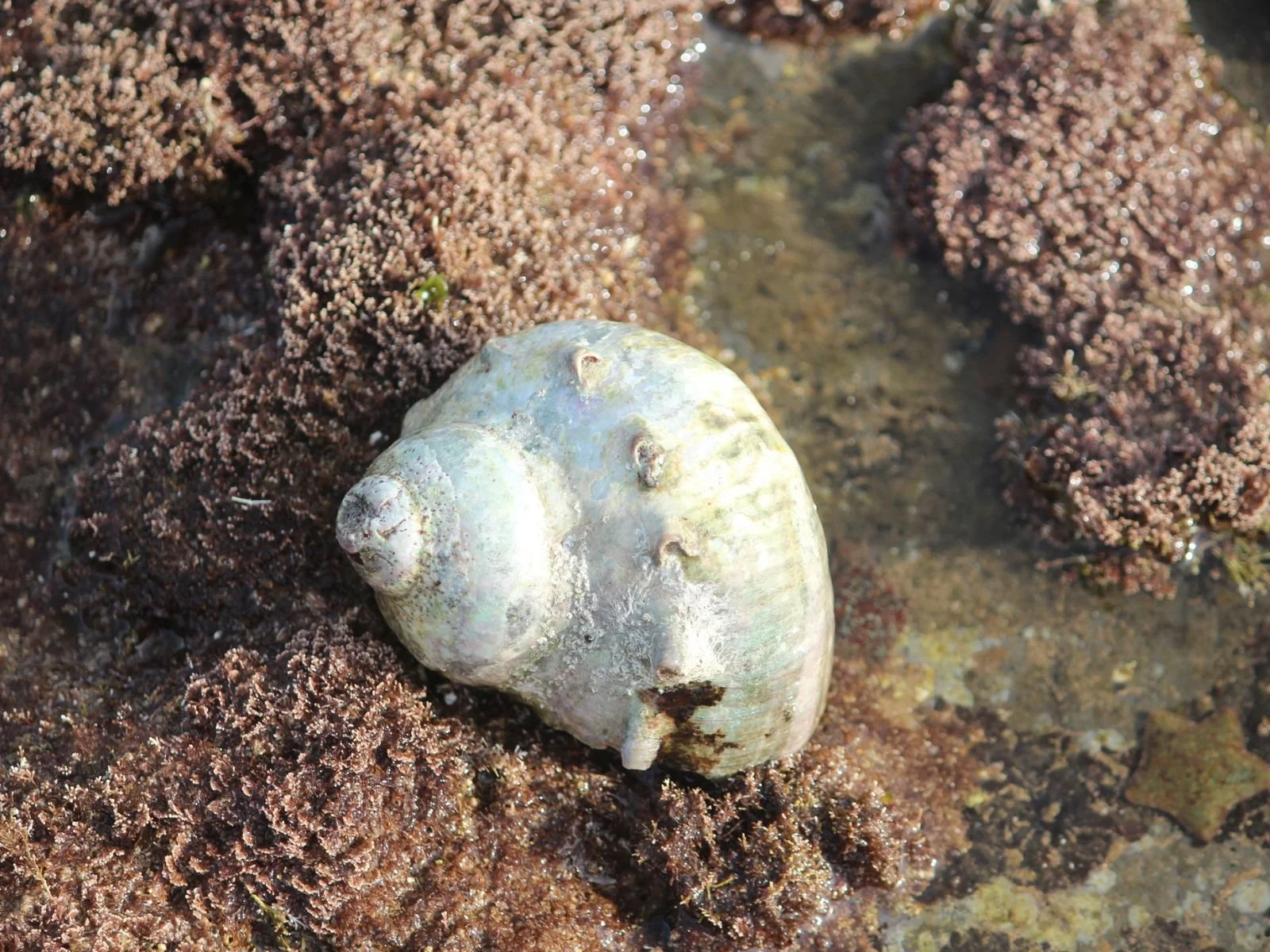
Turban Snails
Family: Turbinidae (Turban Snails)
Species: ~270 species globally and three primary species in the Sydney region: Sydney Turban Snail, Military Turban Snail and Green Turban Snail. The family also includes the Common Tent Shell, Rough Turban Shell and Common Warrener, all of which can be found at Long Reef.Turban snails are found on intertidal rock platforms stretching from NSW to WA and TAS and up to a depth of 10-30 m depending on the species. They use their radula to scrape algae off rocks and kelp. When turban snails are picked up, they withdraw into their shell and close their operculum (‘door’), which is used as a hard covering to protect the snail. After the snail dies, the shell is often repurposed by other organisms like hermit crabs. It has also been used for jewellery, and Indigenous Australian communities used to use the shell to craft fishing hooks.
-
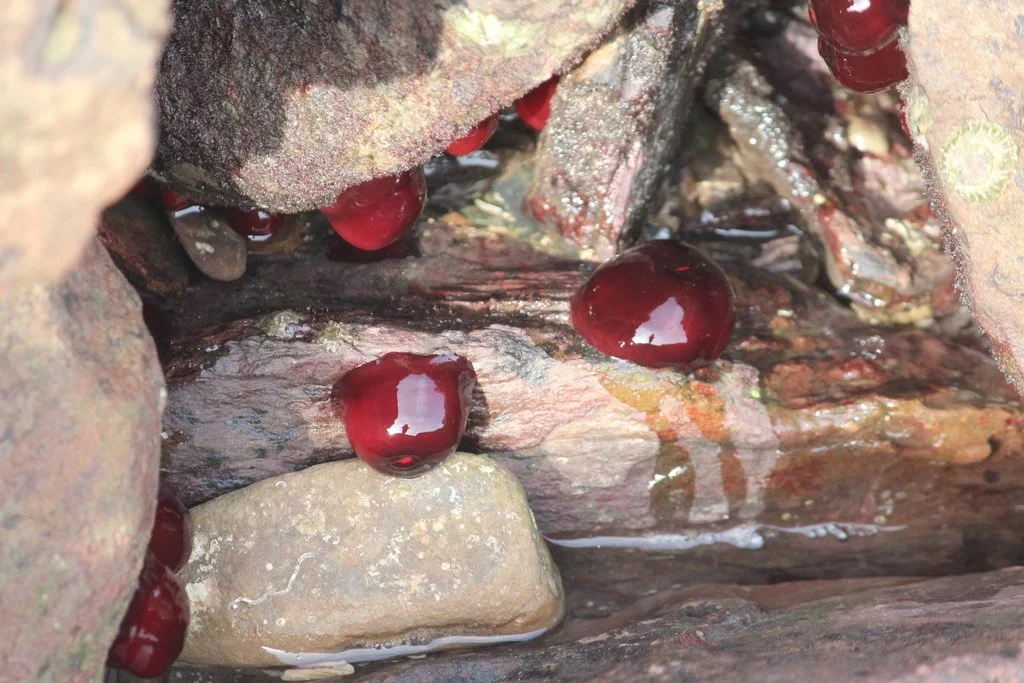
Waratah Anemone
Scientific name: Actinia tenebrosa
Family: Actiniidae (Sea anemones)
Status: No conservation statusThe Waratah Anemone was named after the Waratah flower (Telopea speciosissima) and can be found in clusters at Long Reef and other rock platforms in southern and eastern Australia, and NZ. During low tide this anemone retracts its tentacles to reduce water loss and they look like red blobs, which attach to rocks using their basal disc. During high tide they use their tentacles that are covered in stinging nematocyst cells for defense and to capture plankton and small fish. Adults incubate their babies inside for a year before being released where they attach to nearby rocks, forming clusters which are genetically identical. They can reproduce asexually through cloning and sexually via broadcast spawning, and can live up to 210 years.
-
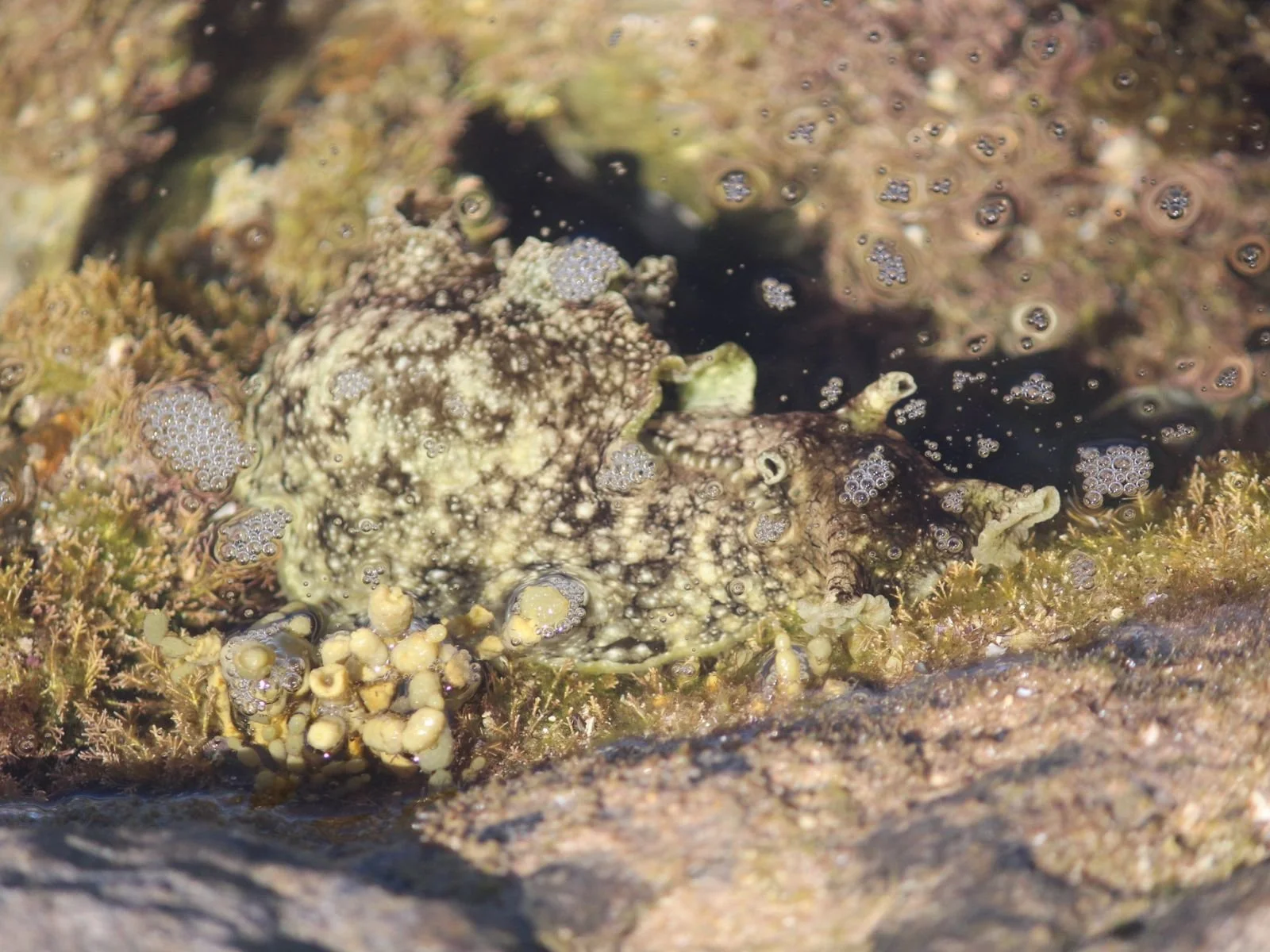
White-speckled Seahare
Scientific name: Aplysia argus
Family: Aplysiidae (True Sea Hares)
Status: No conservation statusSeahares were named after the large tentacles on their heads that resemble a rabbit’s ear, and have a soft body with an internal shell, large parapodia (‘wings’) for swimming and can reach up to 20cm. White-speckled Seahares are frequently found in rock pools at Long Reef but can be difficult to spot sometimes as they are well camouflaged, and will release purple dye if threatened. They use their rasping radula to scrape algae off rocks and eat sea lettuce. They form long chains during mating and release large quantities of yellow eggs that are connected like strings in the Summer. There are other seahare species at Long Reef including Dolabrifera brazieri, Walking Seahare (Aplysia juliana) and Sydney Seahare (Aplysia sydneyensis).
-
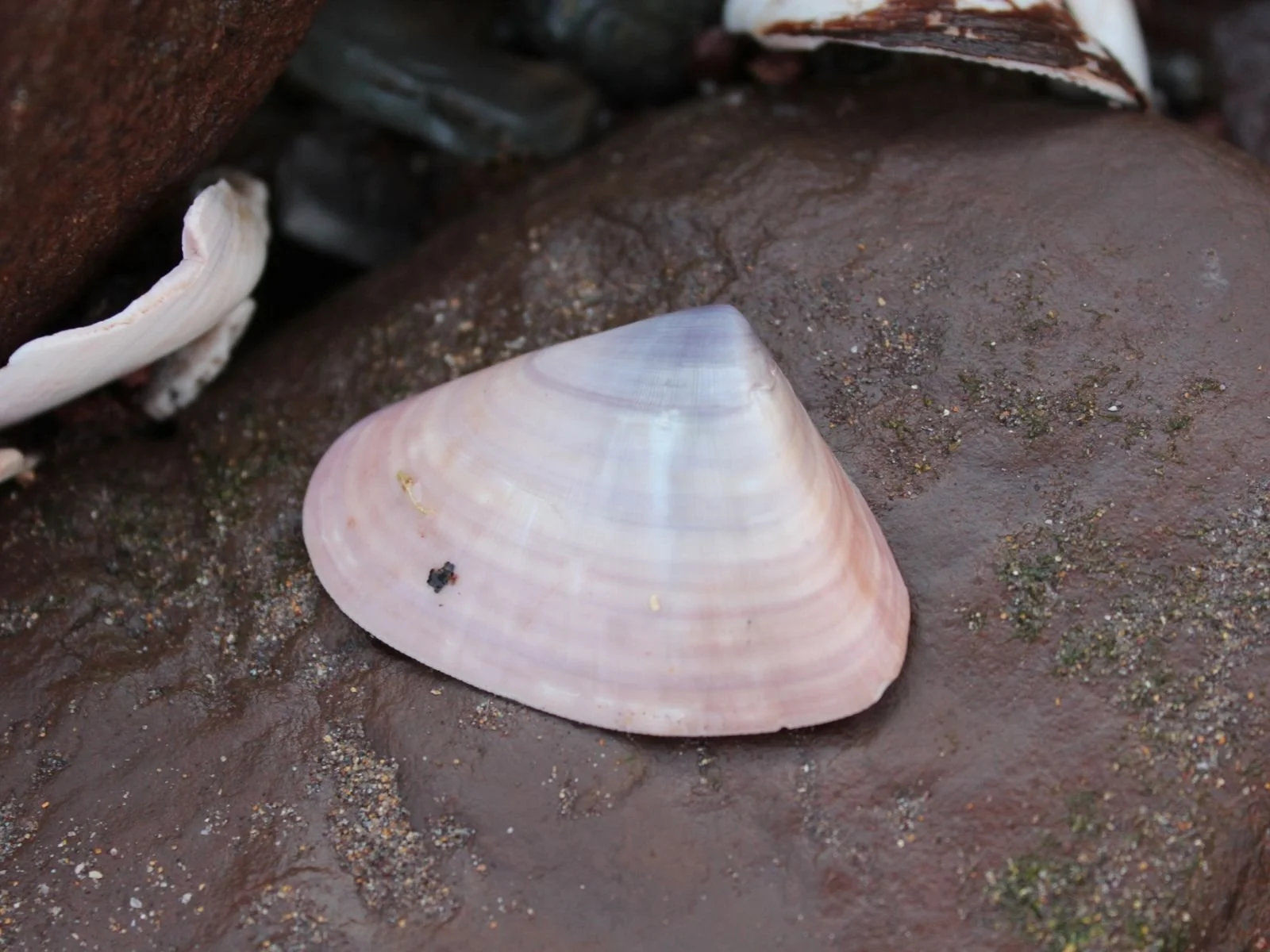
Pipis and mussels
Cockles, Pipis (pictured), and Mussels are bivalve molluscs. Mussels attach to rocks via threads protruding from the shell, while Cockles and Pipis live freely in sandy and muddy areas. Numerous mollusc species inhabit these NSW areas, with the Pipi particularly well-known. It burrows into the sand using its muscular foot to disappear beneath the surface.
-
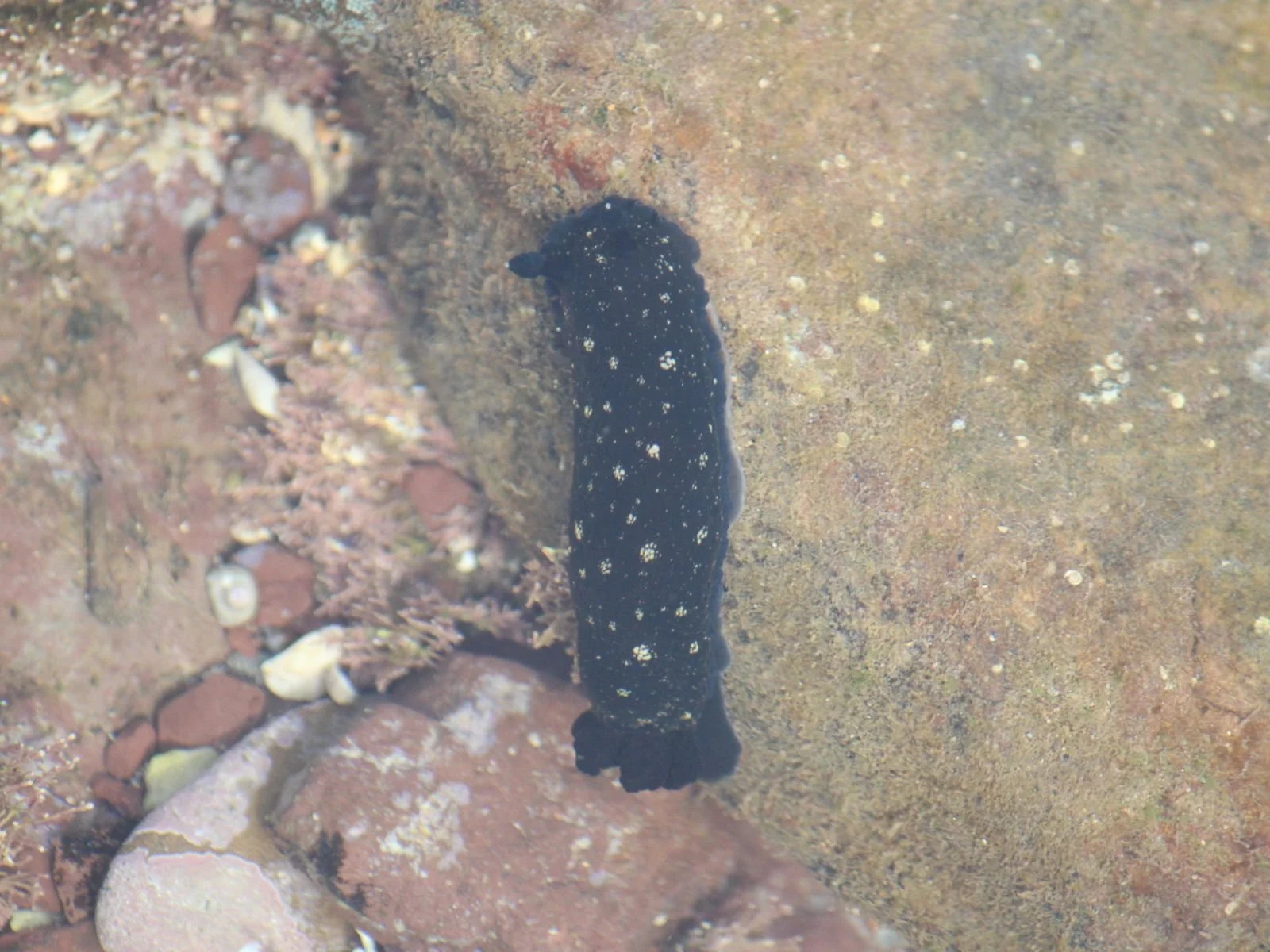
Nudibranches
Nudibranches belong to the same family as octopuses and snails. They possess sensory tentacles at the front and a cluster of retractable gill plumes at the rear, often vibrant in color. Many nudibranches are carnivorous, feeding on sponges and sea anemones, while some consume seaweed, contributing to marine biodiversity.
-
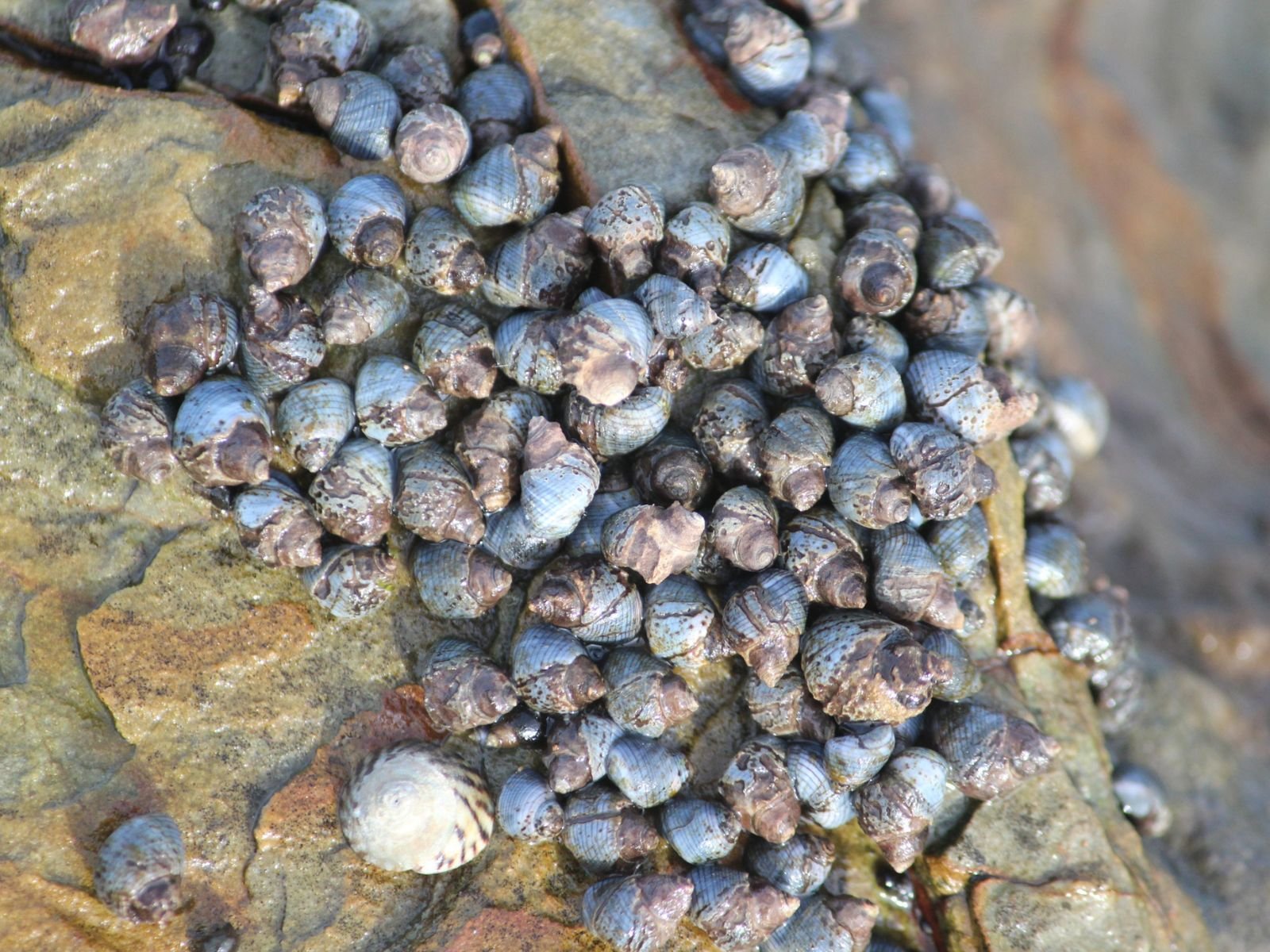
Blue Periwinkles
Blue Periwinkles are very small blue- grey shells that feed on microscopic algae invisible to the naked eye. They live at the upper drier levels of the platform and are able to survive a long time out of water. At low tide they are often found huddled together in cracks and crevices. They follow each other and recognise and respond to familiar surroundings.
-
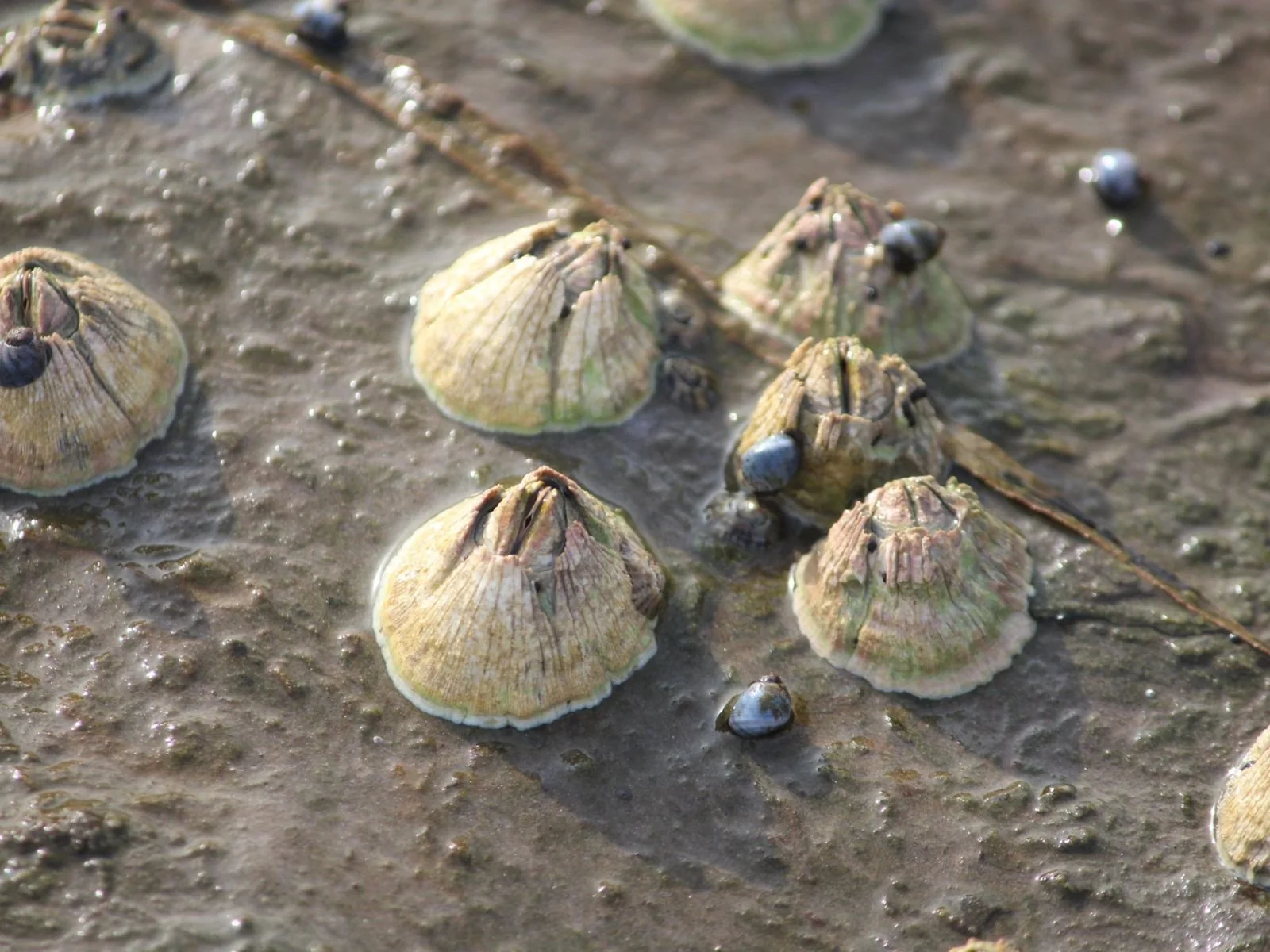
Barnacles
Barnacles, crustaceans closely related to prawns, drift as larvae in the ocean before cementing themselves firmly to rocks upon reaching shore. They construct their limy homes and use their hairy feet to gather food particles when submerged, effectively becoming stationary filter-feeders. Their lifecycle involves several molts to reach adulthood.
-
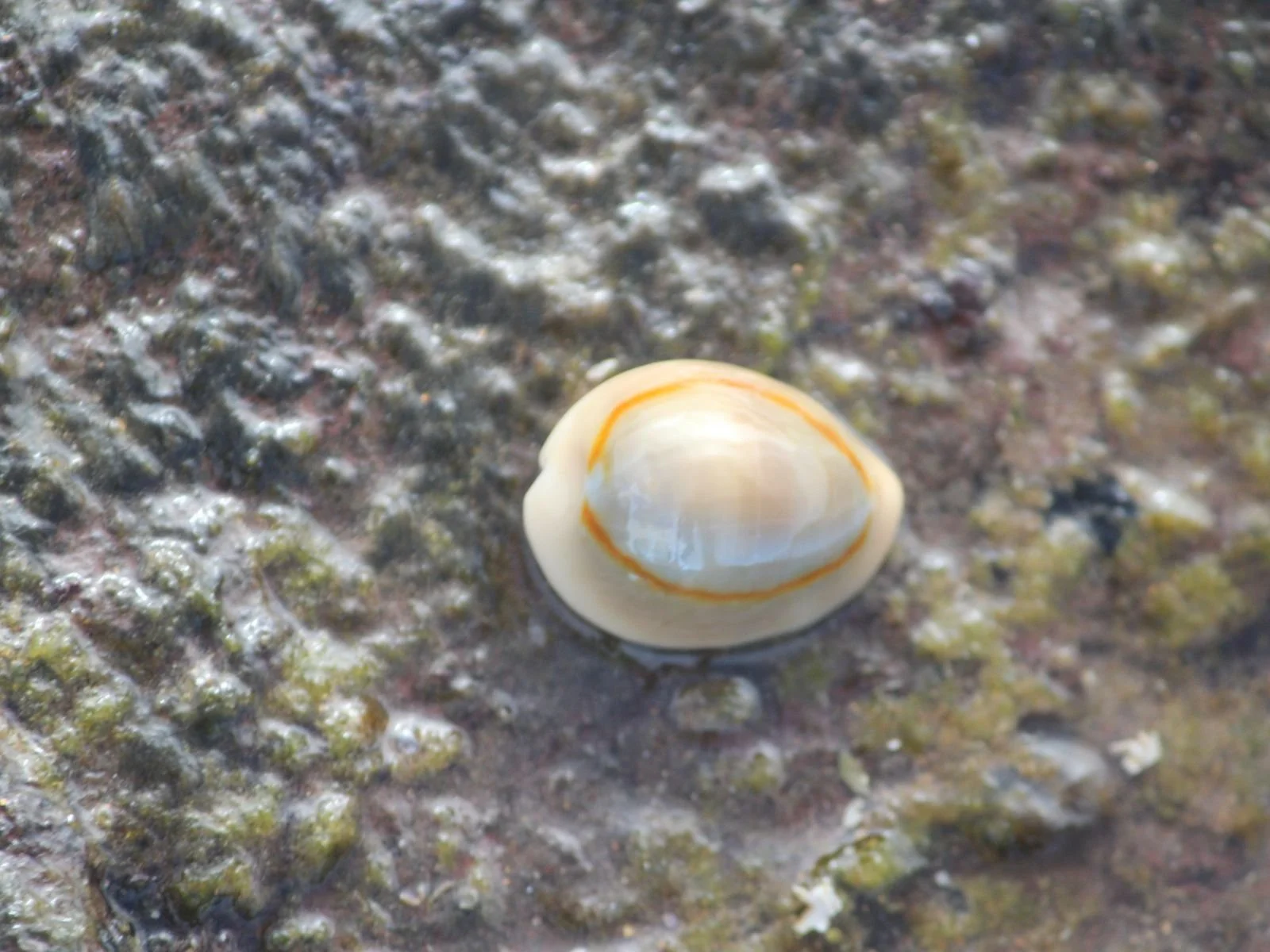
Cowries
For centuries, people have used Cowries as currency and for decoration. Although mainly tropical, they are often found locally. The Cowries’ distinctive smoothly polished sheil is achieved by its mantle flaps, which unlike most snails, usually cover the outside of the shell. The mantle is covered in sensory tentacles.
-
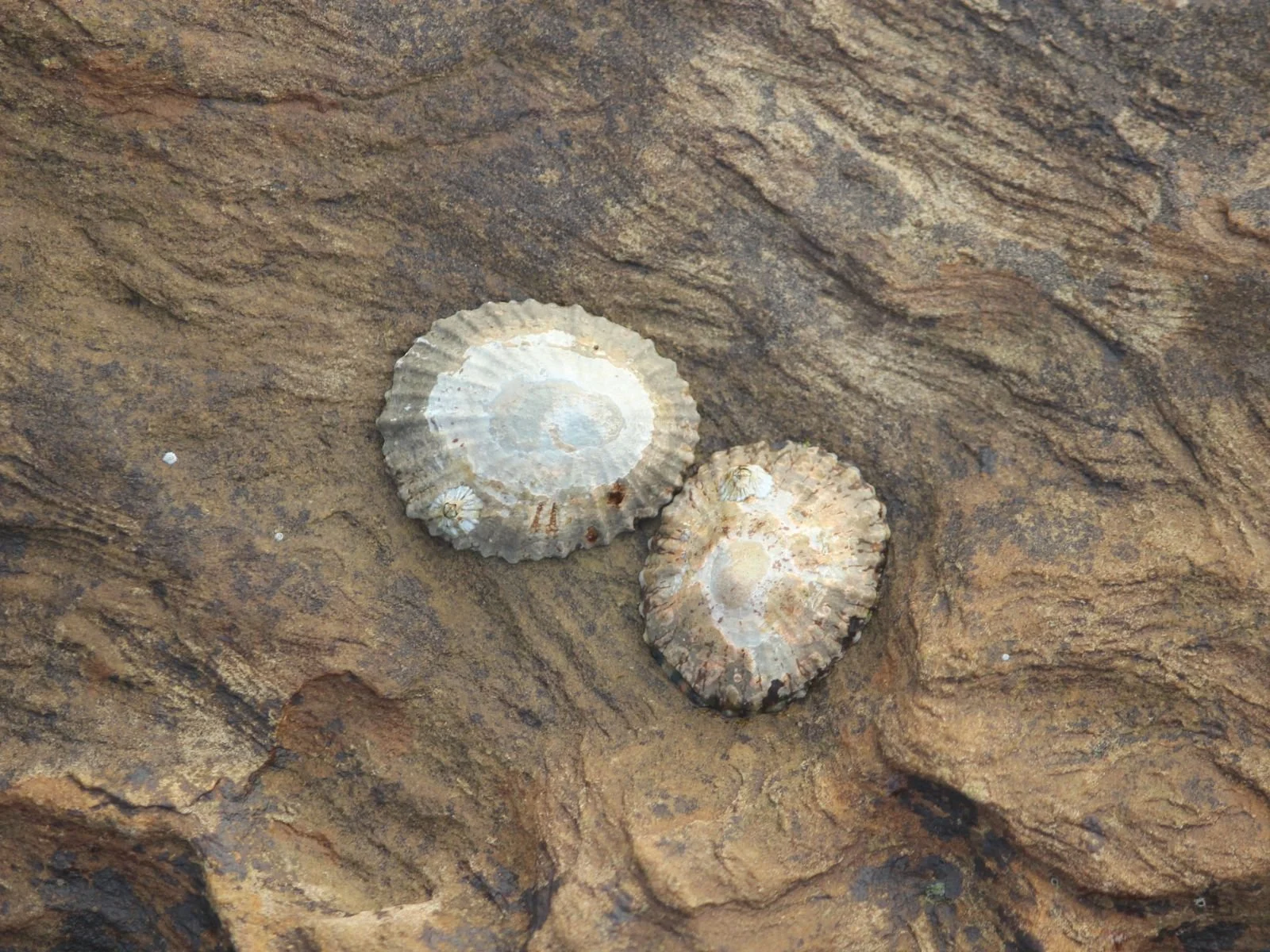
Limpets
Limpets have a shell like a conical cap. They move slowly across the rocks, grazing on microscopic algae or larger seaweeds. Some limpets return to their ‘home’ base, a circular scar on the rocks, after feeding. Limpets and chitons use the suction pressure from their very large foot to hold onto the rock surface.
-
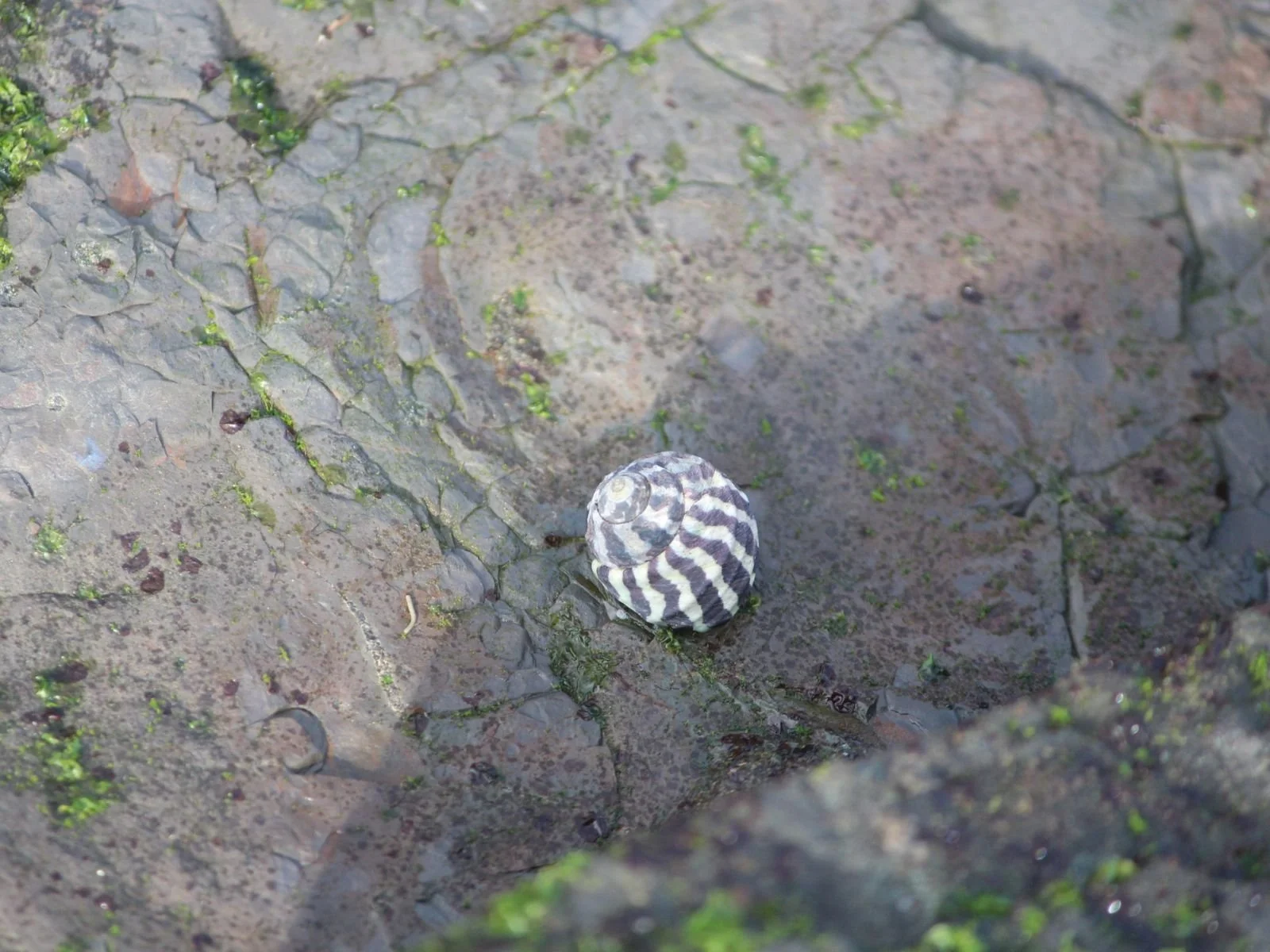
Zebra Trochids
Zebra Trochids are amongst the commonest molluscs of our rocky shores. They are spiralled shells with alternate black and white stripes. The width and number of bands are determined by changing environmental factors. These snails feed on microscopic seaweed.