

Weeds of Long Reef
Weeding the Wilds: Combatting Invasive Threats at Long Reef Headland
The headland and surrounding bushland of Long Reef are under continual pressure from invasive weed species which undermine the native vegetation and coastal ecosystems. From the aggressive spread of bitou bush to dense mats of asparagus fern, these weeds out‑compete indigenous plants on the dunes, cliffs and rock platforms—displacing species such as kangaroo grass and the local heath communities while altering soil and habitat conditions.
Volunteers from the Reefcare Long Reef Bushcare group along with Northern Beaches Council work tirelessly to eradicate established infestations, restore native grasslands (such as the original Themeda grassland) and monitor recovery across the headland. Successes in recent years demonstrate how targeted weed removal and revegetation have been critical to preserving Long Reef’s coastal habitats and supporting its broader ecological values.
-
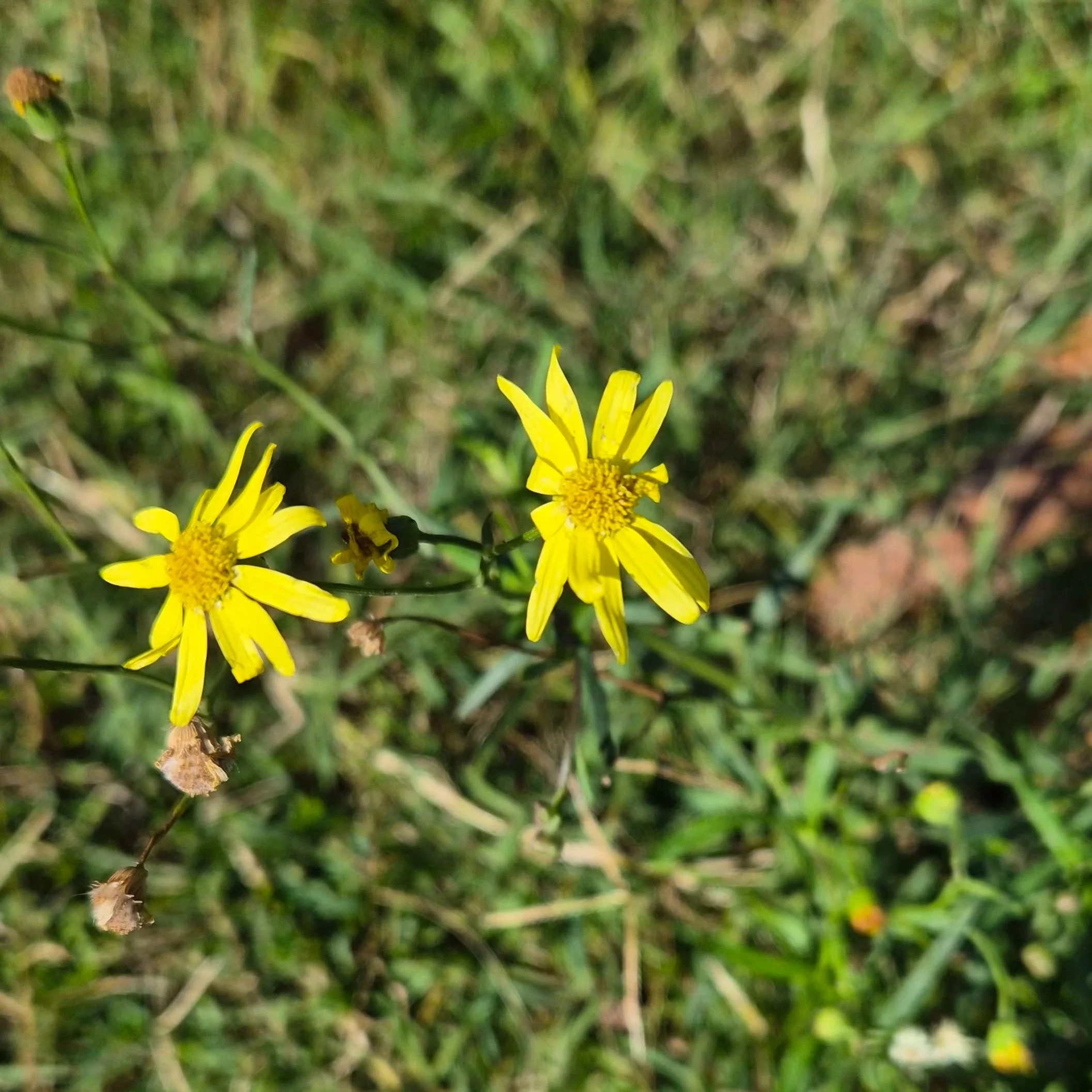
African Fire Weed
Scientific name: Senecio madagascariensis
Family: Asteraceae
Status: It is a Weed of National Significance in the ACT, NSW, QLD and WA.General Information: African Fire Weed is a daisy-like herb which is native to South Africa but was first recorded in 1918 in the Hunter Valley, Australia, and likely arrived in the ballast of ships. It spreads slowly at first, but in the past 30 years, has rapidly increased its range, as it is a highly invasive plant that on average, can produce 10,000 seeds per year. The plant contains toxic alkaloids that can cause liver damage to livestock.
Control: It is the responsibility of the owners and occupants of private land to ensure effective measures are taken to control infestations. This weed is quite common around the greater Long Reef area and occasionally due to wind blown seeds, this weed turns up on Reefcare’s site at the headland.
-
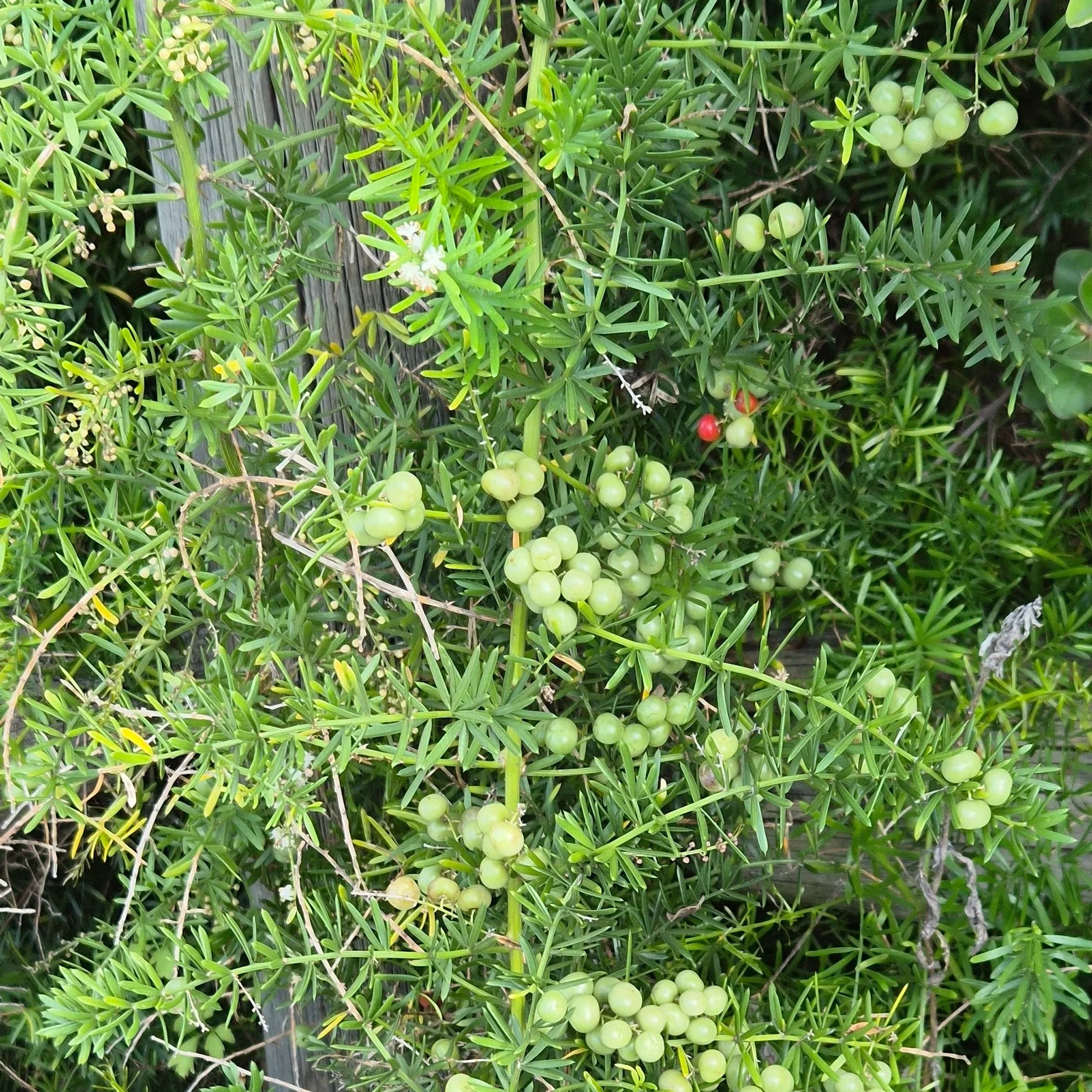
Asparagus Fern
Scientific name: Asparagus aethiopicus
Family: Asparagaceae
Status: It is declared a weed of National SignificanceGeneral Information: Asparagus fern is considered one of Australia’s worst weeds as it out competes native vegetation and prevents new plants from establishing. It grows into large, thick masses several meters across with impenetrable thickets, often along fence lines and in Lomandara at our site, making removal difficult.
Control: It is a huge problem at Long Reef as there are 1000’s of seedlings across the site that have been spread through birds dropping seeds, and underground roots of tubers and rhizomes which propagate if any fragment is left. Eradication requires long term integrated management strategies, including mechanical removal, chemical treatments and monitoring to prevent fruiting and seed spread.
-
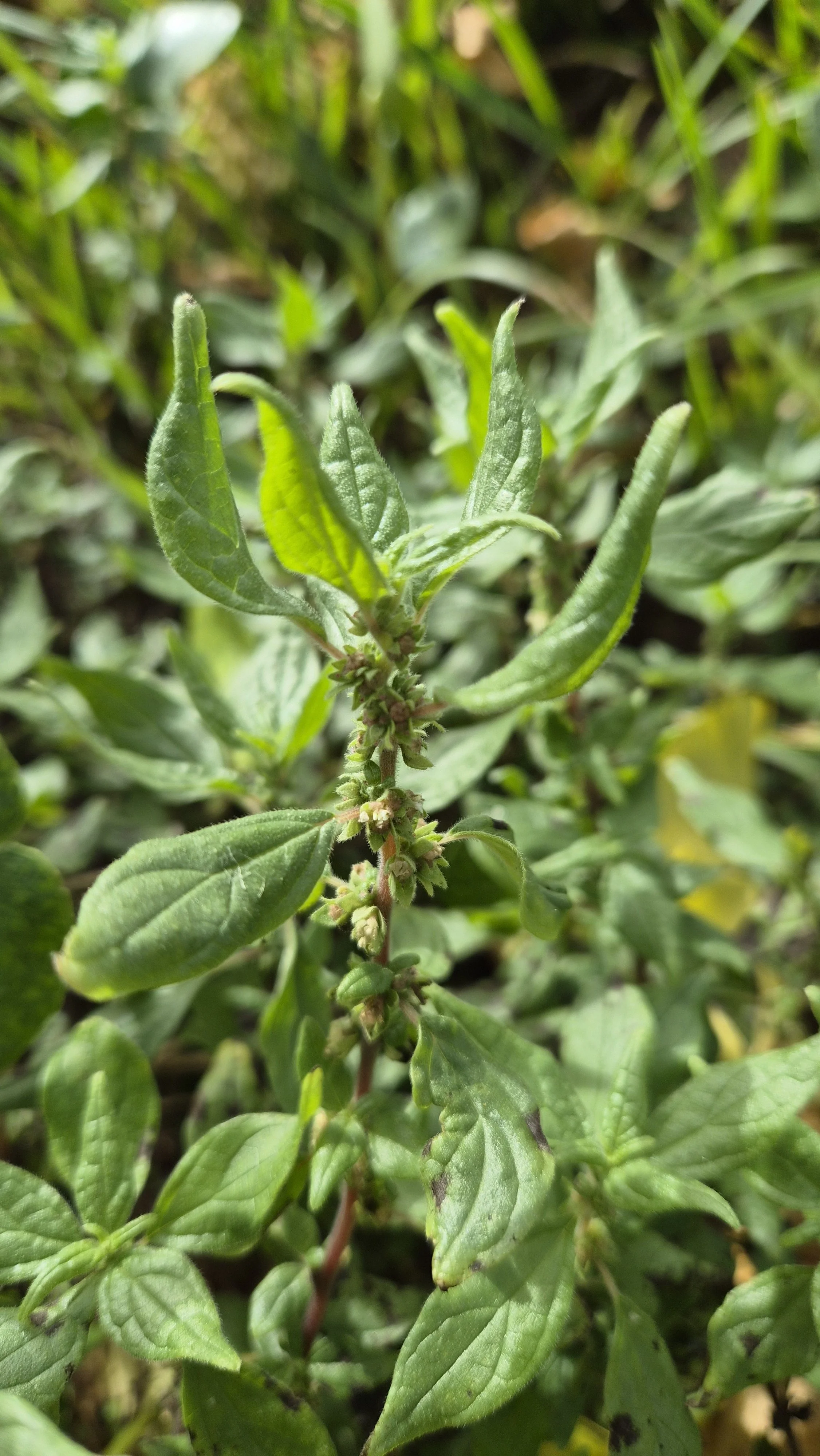
Asthma Weed (Sticky Weed)
Scientific name: Parietaria judaica
Family: Malvaceae
Status: It is decalred a Class 4 noxious weed in the Sydney area.General Information: This is a perennial herb with erect, reddish-green stems about 1m tall and is common along roadsides and in gardens, especially near seepage. It produces a greenish female flower and bisexual flowers with pollen that can cause a severe allergic reaction in some people, hence its common name. It spreads mainly through seed dispersal by animals, people and machinery.
Control: Private land owners are expected to take effective measures to control infestations. This weed was not seen at Reefcare's site until 2020 when the Northern Beaches Council had contractors clear an area bottom-west of the main track to plant coastal species, and we have been trying to control it since.
-
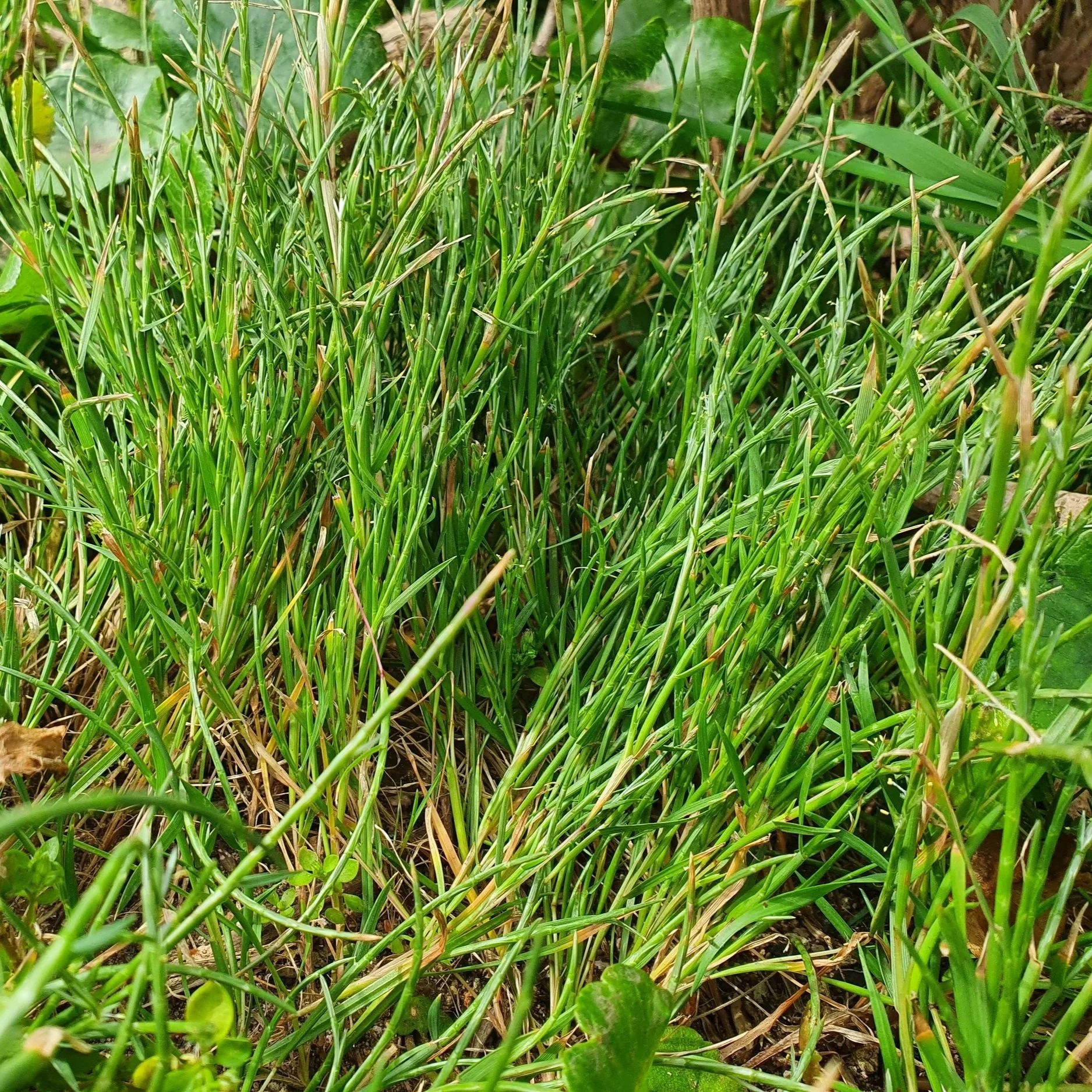
Barbed Grass (Coast Barb-grass)
Scientific name: Parapholis incurva
Family: Poaceae
Status: Naturalised in the southern half of Australia, Tasmania and the Bass Strait islandsGeneral Information: Barbed Grass is a tufted annual that grows up to 30 cm high, with green flowers from September to December and then fruits October–December. It is native in Western Europe, Asia and Northern Africa but is widely naturalised across the world.
Control: It is quite easy to pull out, but to be time economical with a big infestation, spraying when in the growth stage around September is best. It likes saline soils subject to flooding, or coastal sandy and rocky places, hence it is no surprise that it appeared at the top of Long Reef at the whale sculpture in 2023. Now in 2026, it can be found heading out from each side of the track (mainly the northern side) to the bottom of the track into our lovely north-eastern dune area.
-
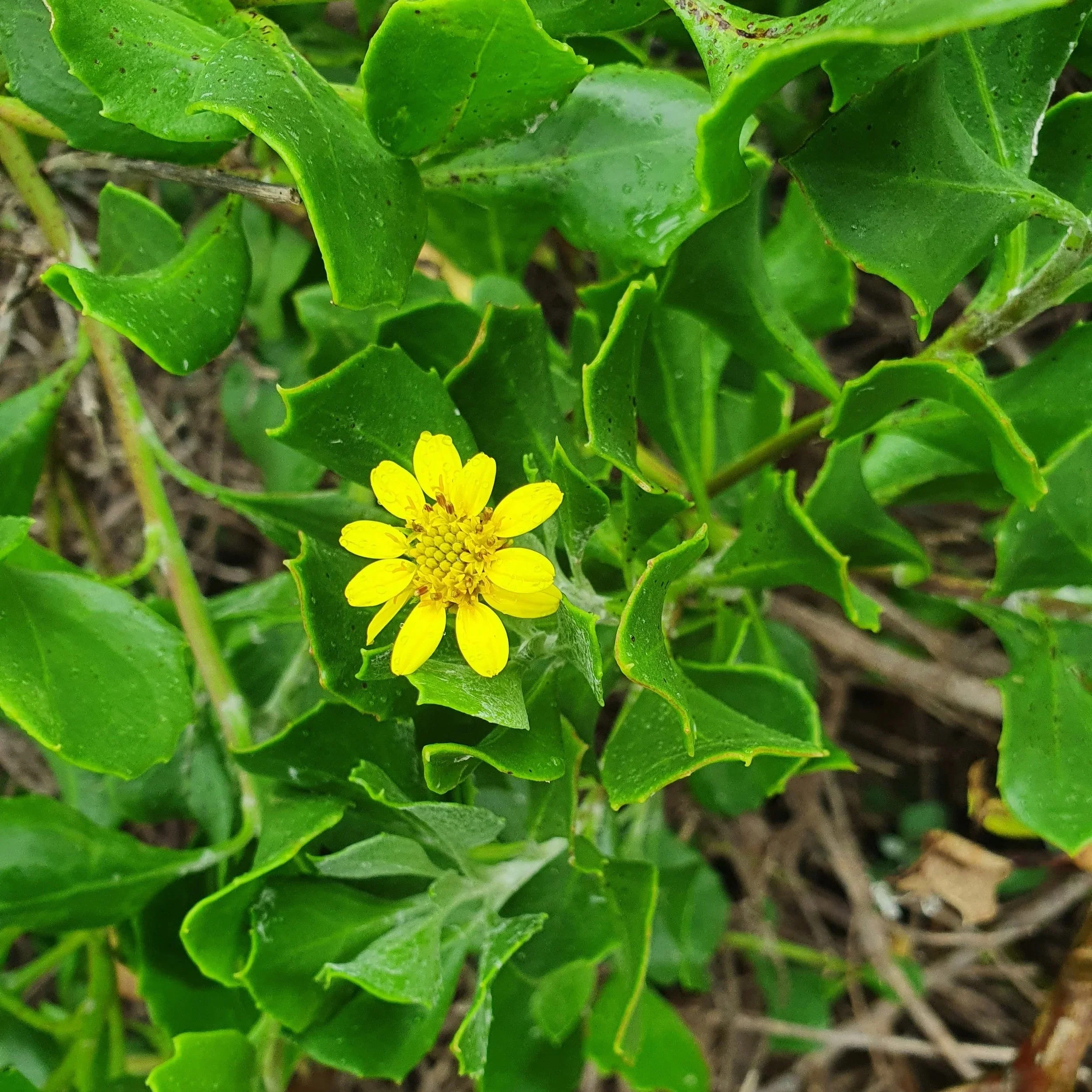
Bitou Bush
Scientific name: Chrysanthemoides Monilifera subsp. rotundata
Family: Asteraceae
Status: A weed of National SignificanceGeneral Information: Bitou Bush is a native of South Africa but can be found all along the Eastern coast of Australia, with almost pure stands of 220km totaling around 70,000 hectares. It was initially recorded in 1908 near Newcastle, but from 1946 it was deliberately planted to aid in erosion control and post-mining rehabilitation. It is an aggressive weed that can out compete and eliminate native coastal dune vegetation, and can produce up to 50,000+ seeds per plant that have up to 2 years viability.
Control: The NB Council introduced the bitou leaf roller moth 12 years ago which feeds on the plant but the bulk of the elimination at Long Reef is through physical work by Reefcare volunteers using the ‘cutting and painting’ technique.
-
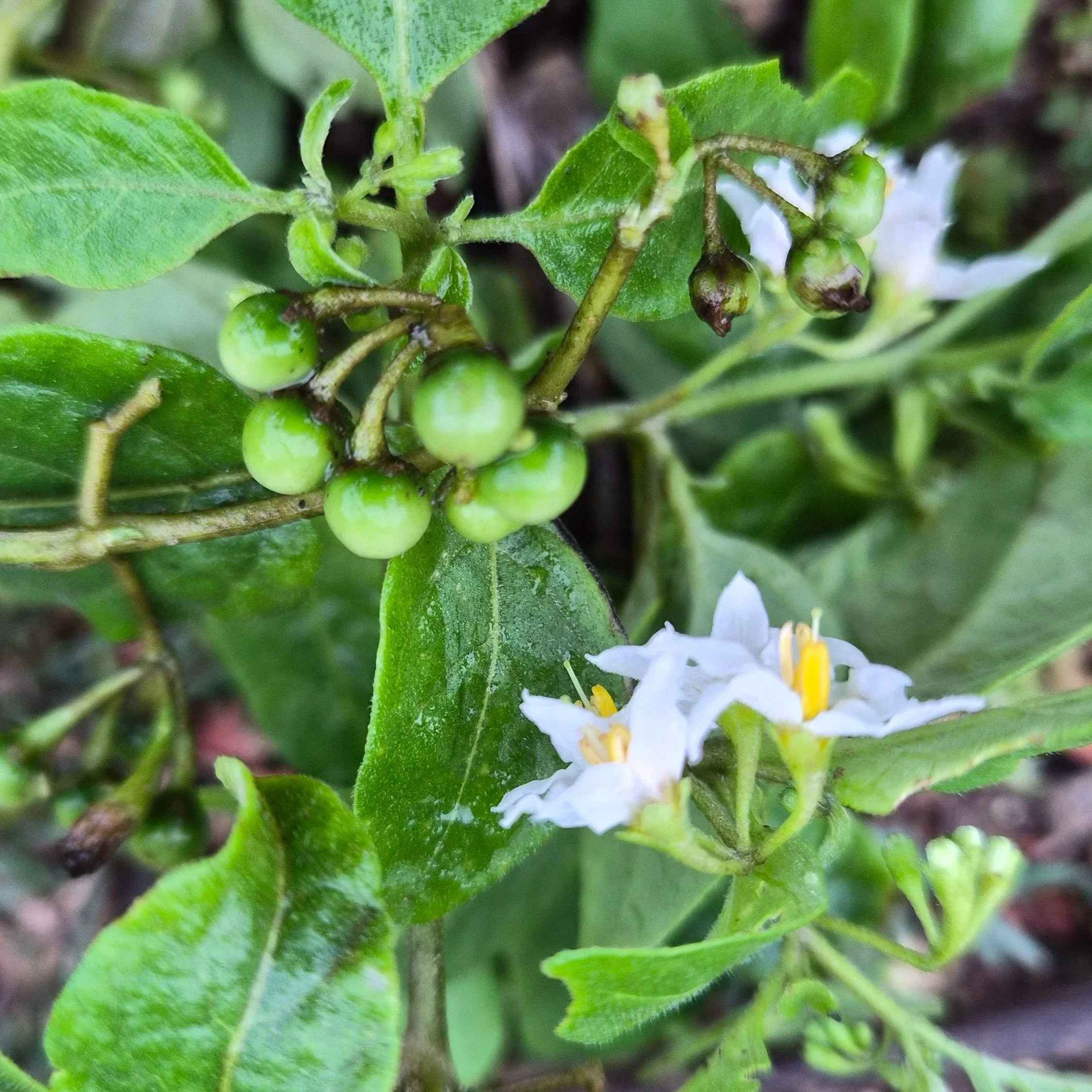
Blackberry Nightshade
Scientific name: Solanum nigrum
Family: Solanaceae
Status: It is an environmental weed in Victoria, New South Wales, W.A., QLD and N.T.General Information: Blackberry nightshade is a serious agricultural weed in 61 countries that competes with crops and native vegetation as it produces a large quantity of seeds with high viability and is drought-tolerant. It thrives in a variety of environments, including coastal areas such as Long Reef and disturbed sites like roadsides. The plant is revered for its medicinal properties dating back to ancient Greece and was cultivated in Africa, North America, and 15th-century China during famine, but it also feared for its poisonous uncooked leaves and berries.
Control: At Long Reef it is a target species that we pull out before it spreads, often around autumn, and it needs to be bagged whenever the plant has green or black berries.
-
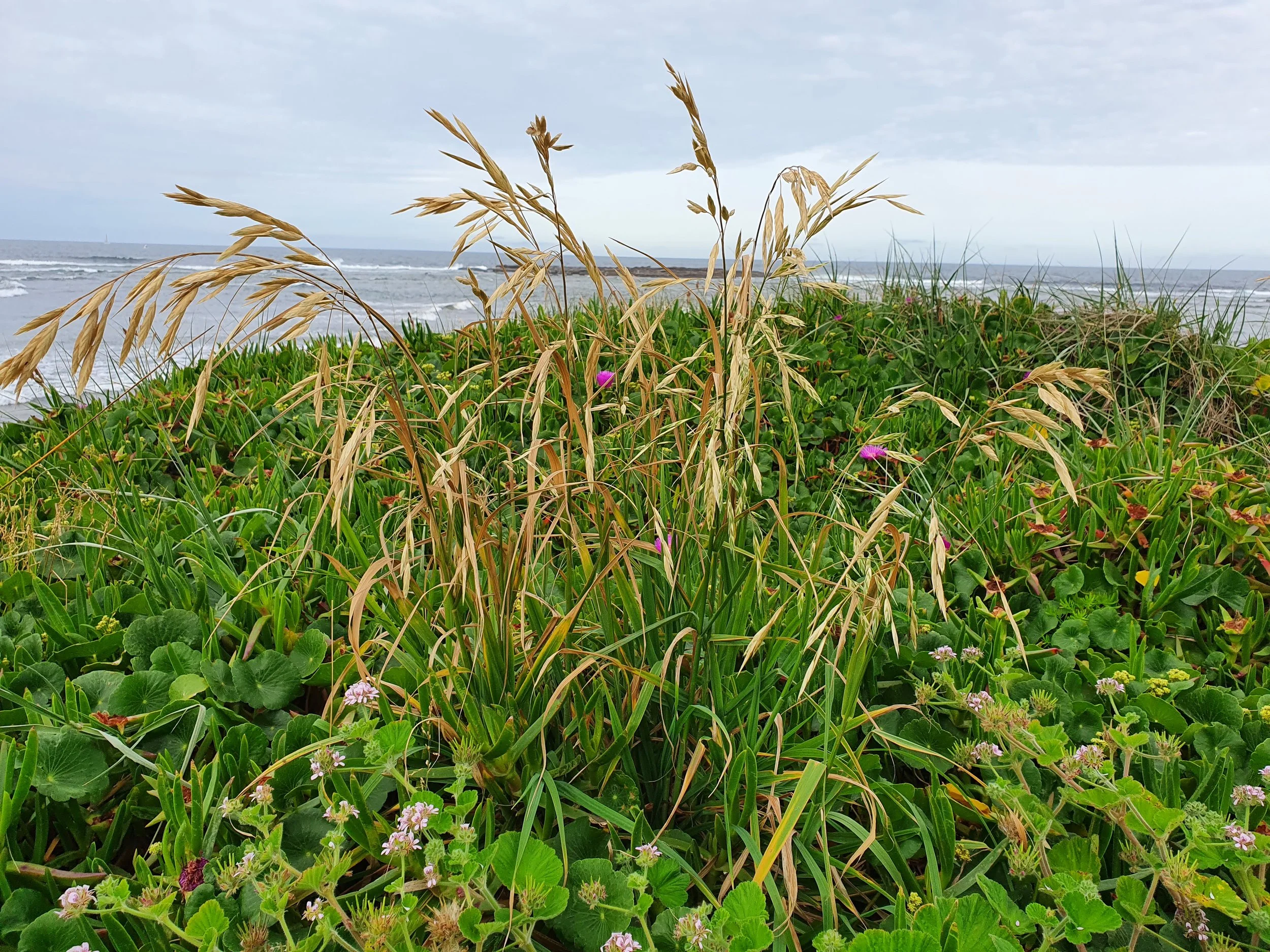
Bromus Grass
Scientific name: Bromus catharticus
Family: Poaceae
Status: Naturalised in all Australian states except the N.T.General Information: Bromus Grass can be distinguished from other grass genera through its mostly closed leaf sheaths and awns which are inserted near an apex, closing the flowers for self-pollination. It grows in open, disturbed and natural areas, such as roadsides, orchards, and grasslands. It mainly spreads through contaminated agricultural produce and attachment to vehicles, clothing, shoes or equipment, which is probably how this came to Long Reef in 2019.
Control: Bromus can produce an average of 1000 seeds/m2, viable in the soil for up to three years, so when it flowers at Long Reef Aug-Oct, we target and bag the seed heads, pull the plant from the ground easily and then the leaves are left to rot.
-
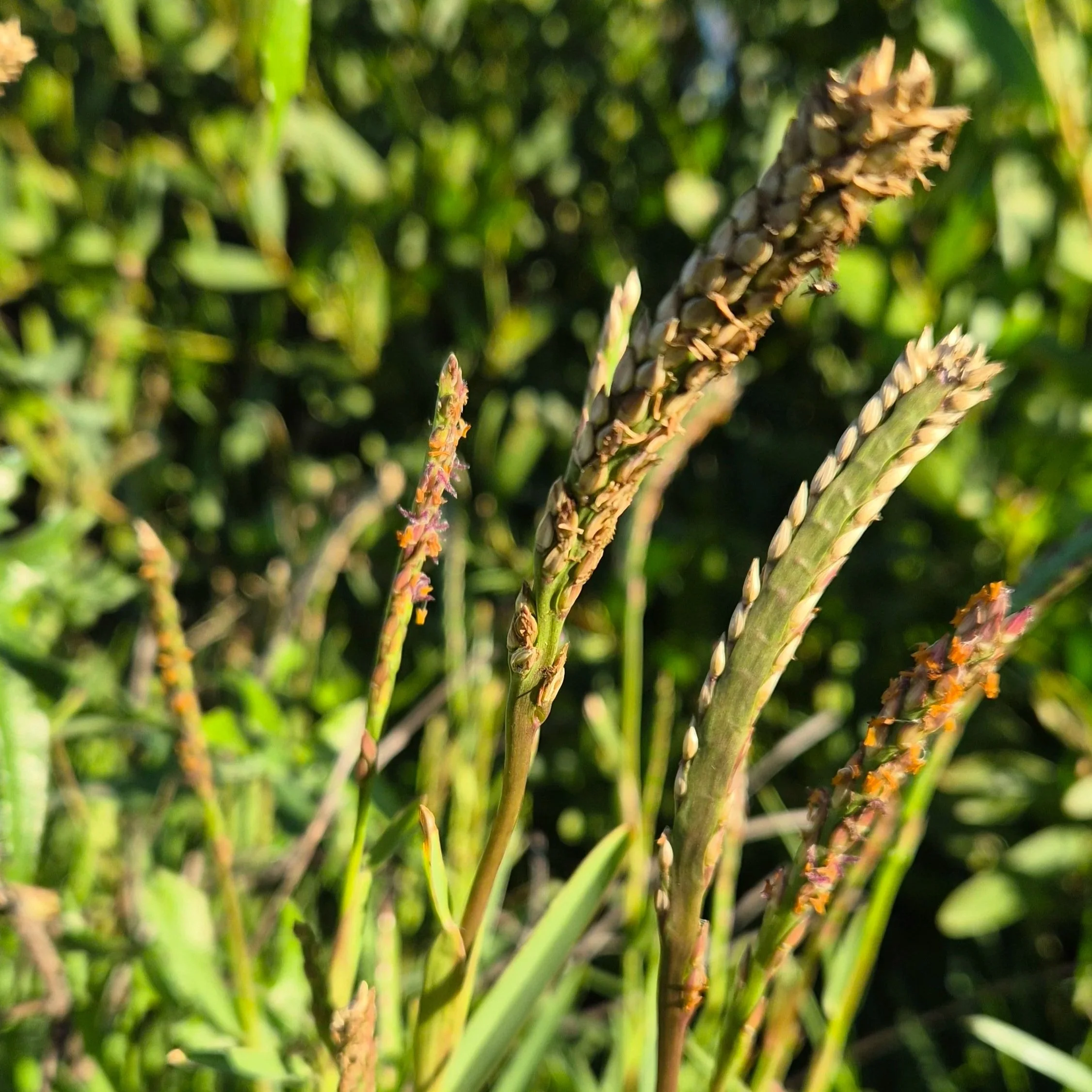
Buffalo Grass
Scientific name: Stenotaphrum secundatum
Family: Poaceae
Status: Environmental Weed in N.S.W, VIC, W.A, S.A. and south-eastern Qld.General Information: This is a long-lived creeping grass that grows 10-30 cm tall with broad flat leaves that are typically 5-8 mm wide, which produces roots at every node and short upright flowering stems/seed-heads of flower spikelets. Seeds and stem segments are dispersed in dumped garden waste, water, animals and vehicles. Long Reef has a huge problem with Buffalo Grass, but unfortunately it is often the main choice of a lawn for suburban gardens.
Control: Reefcare will need to start work in a defined area and work out, with a mixture of weed spray in bad areas with no natives and then digging to remove all parts of the grass including nodes so it will not reappear. Getting rid of this grass is going to be very long term.
-
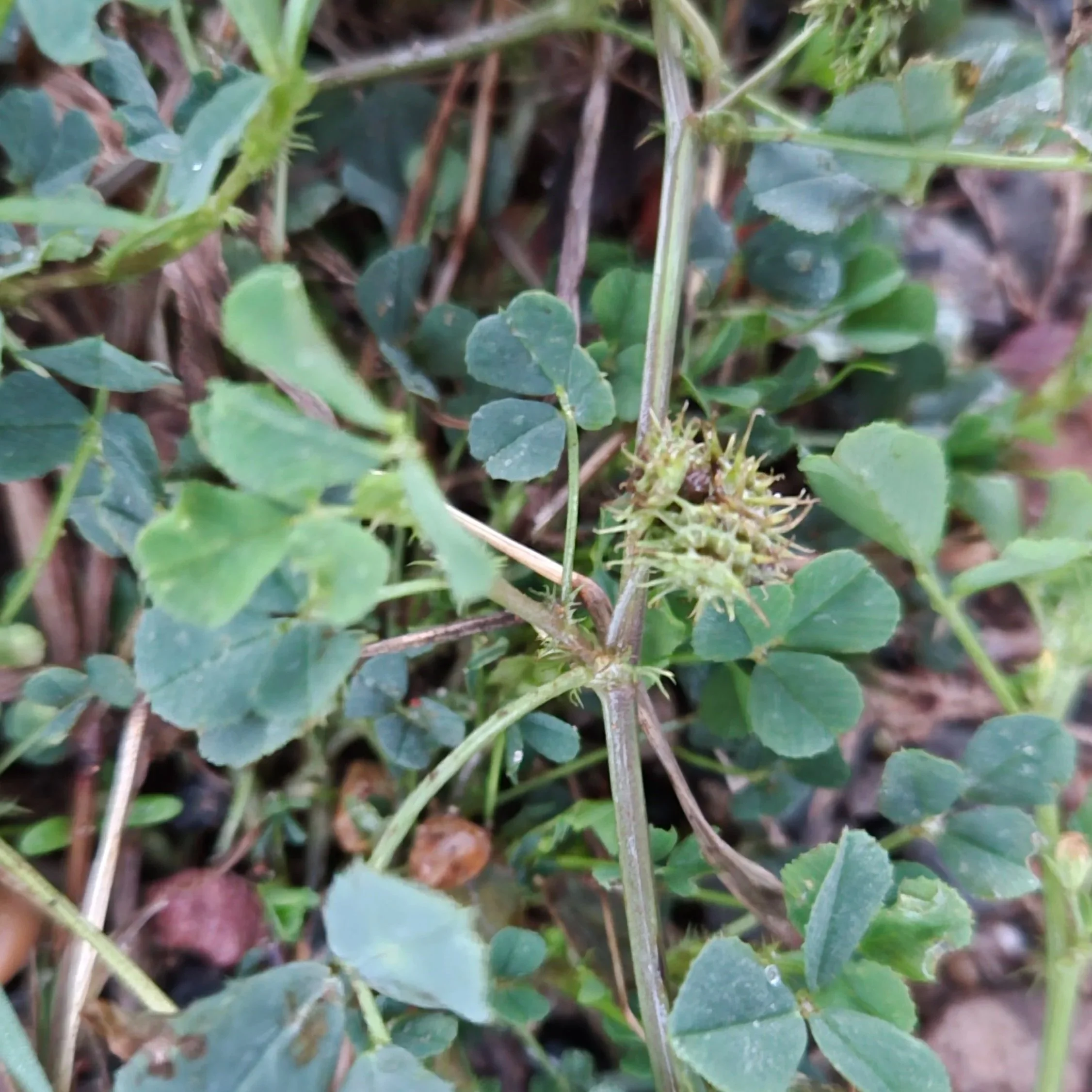
Burr Medic
Scientific name: Medicago polymorpha
Family: Fabaceae
Status: Environmental weed in NSW, WA and Vic. It is widely naturalised throughout most of Australia.General Information: Burr medic is widely naturalised in disturbed areas worldwide and can tolerate full sun or partial shade. It has tripartite leaves with slightly serrated edges, and tiny yellow flowers lipped and clustered into flower heads of 2-10 flowers that resemble clovers and attract insects. The flower turns into a fruit containing seed heads covered with hooked prickles on the outside of the pod, which starts out green and quickly turn brown and hard. They are dispersed by water, clinging to animals and clothing as they are quite difficult to remove from fabrics.
Control: It can be difficult to fully pull out due to its tap roots so for large infestations it is best to spray with herbicide as it is far too time consuming to hand remove, from our experience at Long Reef.
-
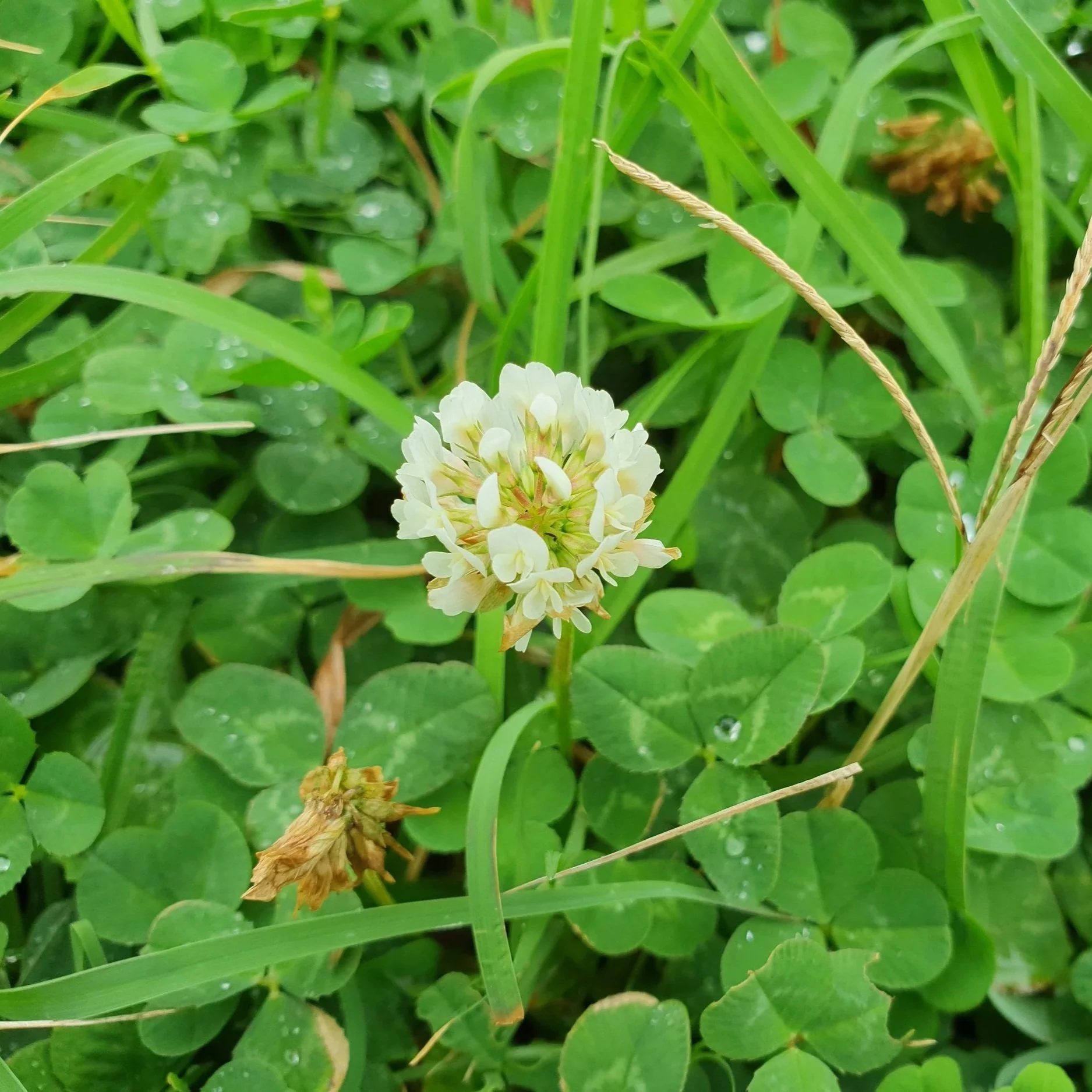
Clover (White Clover)
Scientific name: Trifolium repens
Family: Fabaceae
Status: Clover is a broad leafed weed in Australia.General Information: Clover is a native to Europe and central Asia, but is now naturalised worldwide as it can withstand poor conditions making it a persistent and tough weed. It is easily recognised by its trifoliate leaves and has small globular clusters of 1.5-2cm white flowers borne on stalks above the leaves, which are loved by bees. It has creeping stems that root at the nodes forming dense mats which allow the plant to spread aggressively, rooting wherever stems touch the soil. This weed appeared in 2020 on the western flat when the paragliders used it for training and groups of teenagers had parties with bonfires. It had been an absolutely glorious paddock of Themeda but by 2025 it became hard ground with dozens of weed grasses.
Control: It is almost impossible to hand weed clover as it breaks off too easily leaving behind tap roots, so the only way to control it unfortunately is with a suitable herbicide spray.
-
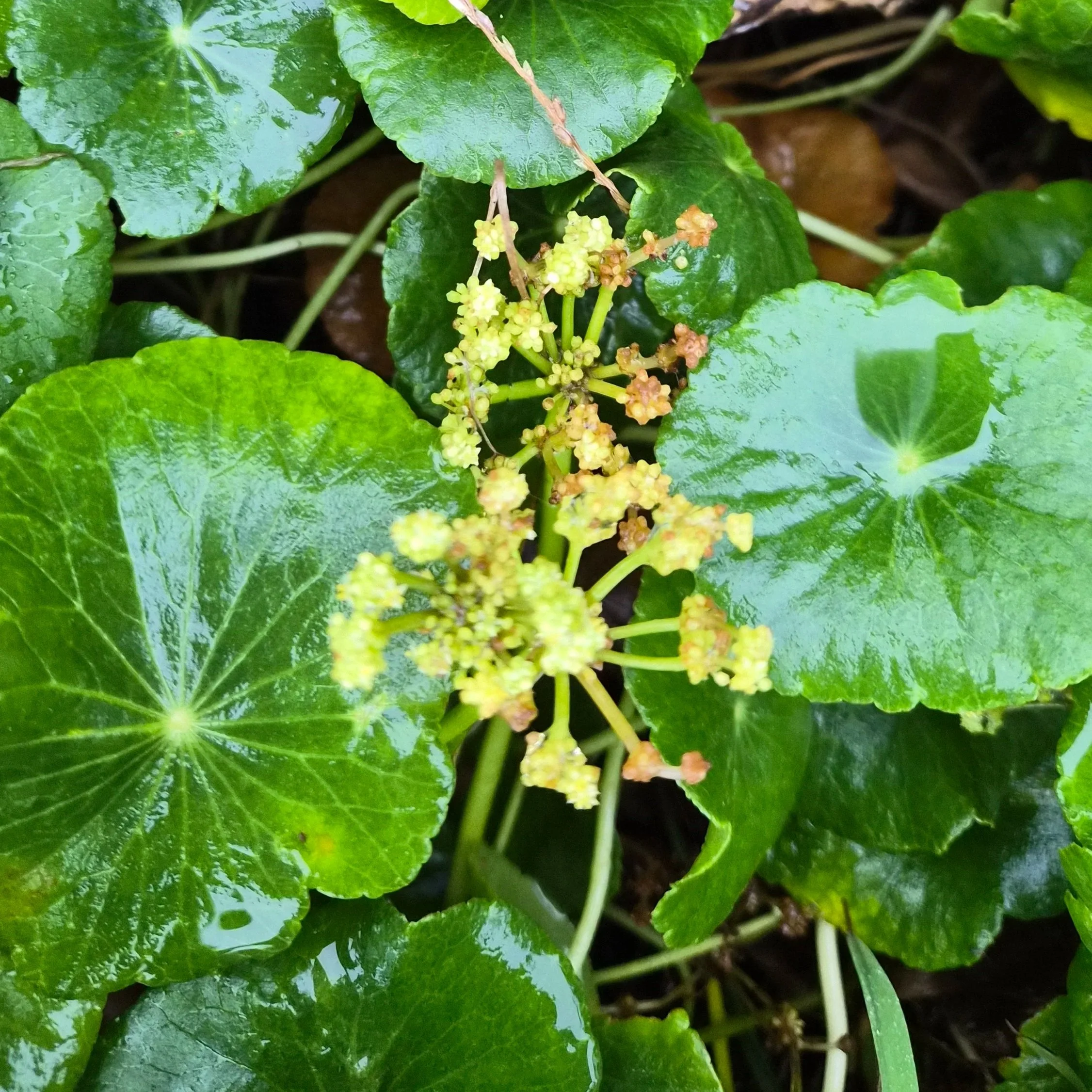
Hydrocotyle, Pennywort
Scientific name: Hydrocotyle bonariensis
Family: Was Apiaceae, now Araliaceae
Status: Environmental WeedGeneral Information: This weed is common along the coast throughout south-eastern Australia, and was probably accidentally introduced in the ballast of early shipping. It has spread along the coast by currents and has become so common that few people recognise this plant as an alien. It is a great coloniser of coastal dunes and on sandy soil on cliff faces in somewhat extreme conditions, and Long Reef is just perfect for this weed – it is a huge problem on site.
Control: Hydrocotyle is pretty tough and can survive being sprayed with most selective herbicides. At the present time, Reefcare cannot find a suitable method for the control of this weed at Long Reef.
-
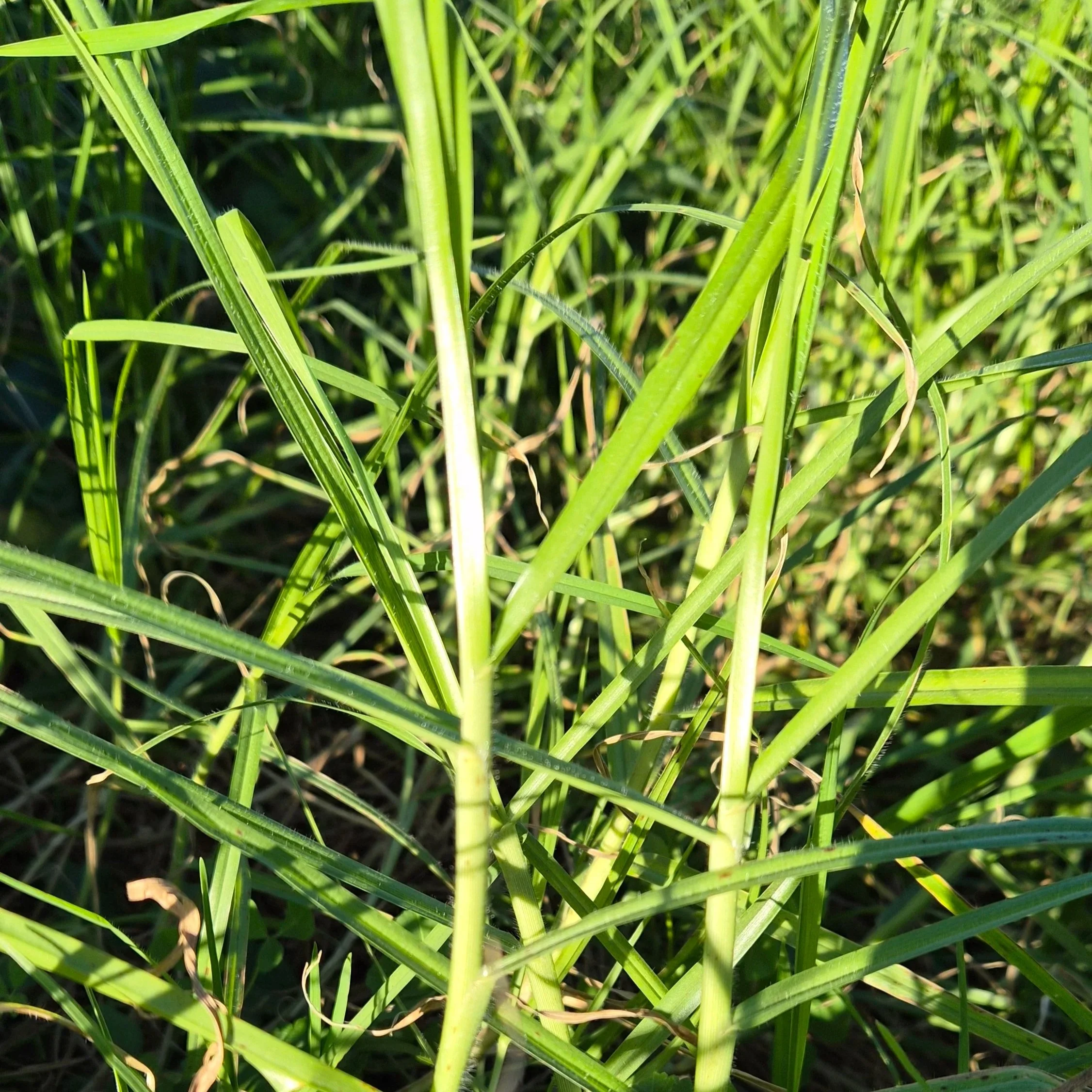
Kikuyu Grass
Scientific name: Cenchrus clandestinus
Family: Poaceae
Status: Naturalised in AustraliaGeneral Information: Previously known as Pennisetum clandestinum, Kikuyu came from Kenya, but a single plant was introduced into Australia in the early 1900s. As this original plant produced hardly any seed, propagation was by stolons. In Australia, Kikuyu is fast-growing and aggressive, spreading rapidly through runners (stolons and rhizomes). The leaves have a finer texture than buffalo grass as they have a V-shaped fold along the midrib and is a lighter green.
Control: Hand removal for small areas, the grass can be dug out using a shovel or trowel, ensuring both the runners and roots are taken and disposed of, which will help prevent regrowth. Vinegar and salt spray can help weaken Kikuyu, but the use of herbicides such as glyphosate-based herbicides for a complete kill may be necessary.
-
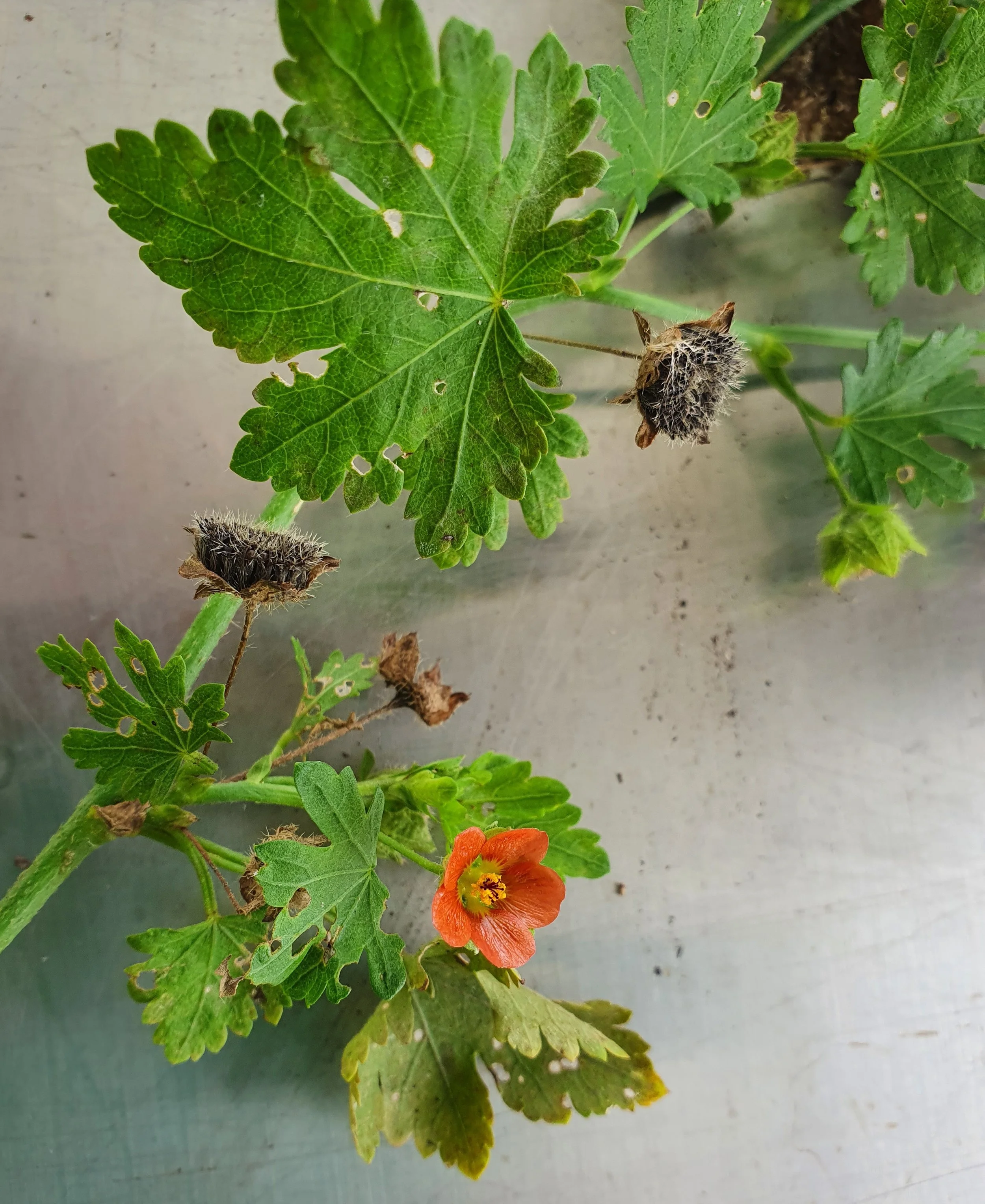
Redflower Mallow
Scientific name: Modiola caroliniana
Family: Malvaceae
Status: Not DeclaredGeneral Information: Redflower Mallow is a creeping perennial that is native to South America and likely arrived as a hitchhiker on imports of live sheep from Mexico or Argentina. It can propagate vegetatively by rooting at the nodes, and in Australia, seeds can germinate on the scats of introduced deer but not those of native kangaroos. The solitary flowers have 5 orange-red petals and are borne on peduncles (stalks) in the leaf axils. Five hairy green sepals are fused at the base. Fruit is a distinctive wheel-shaped schizocarp, 7-9 mm in diameter which splits at maturity into 16-22 two-seeded segments (each segment is called a mericarp).
Control: As this species can spread by rooting and seeds, management commonly focuses on preventing spread and fully removing plant material that can re-root.